August 7, 2026: Summer Heat, Deworming, Barn Wisdom, And Birdie Update
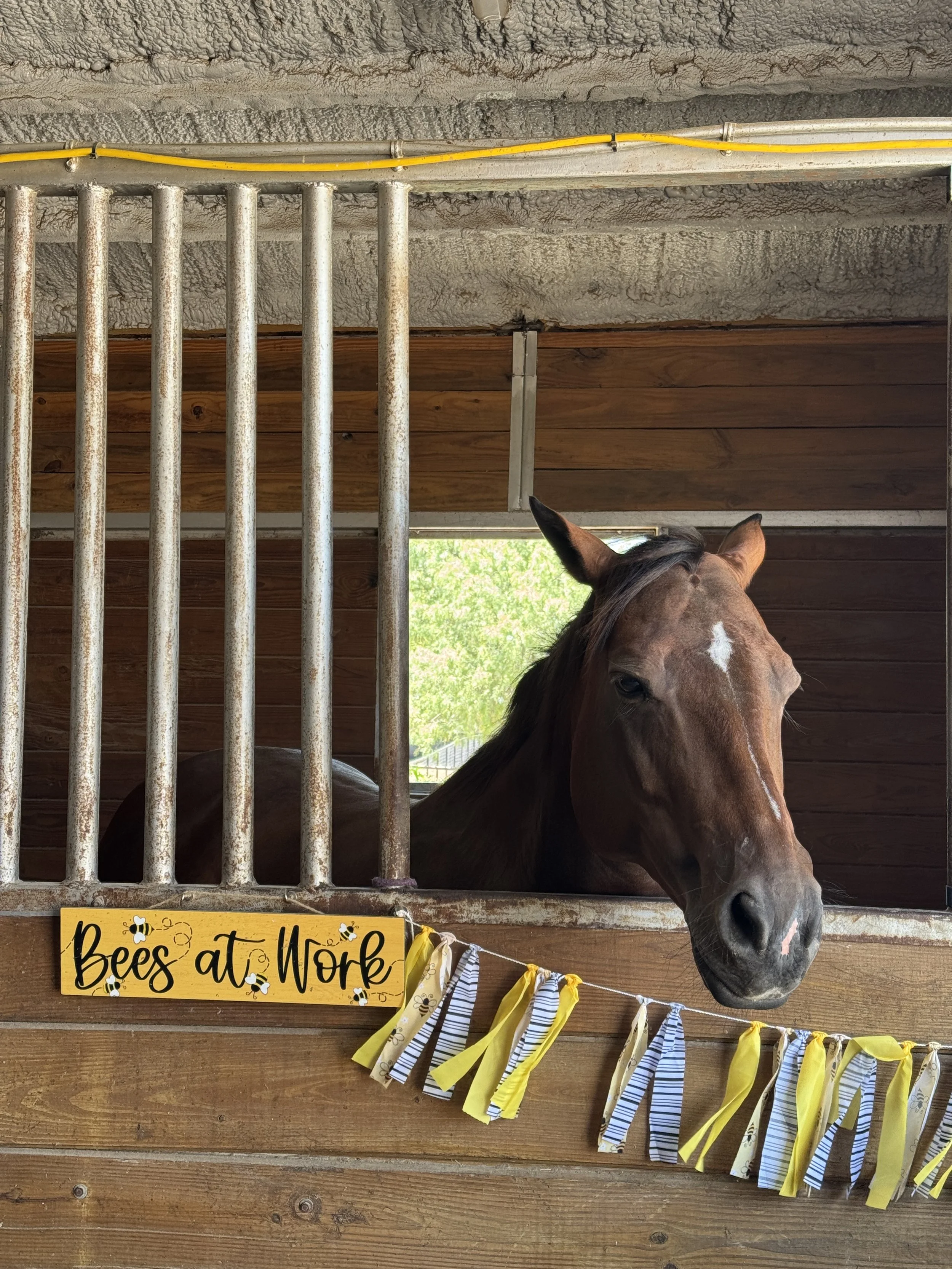
No, I didn’t paint the sign, but I may paint the other side. What should it say?
One of my favorite things about spending time at the barn is that someone is always sharing advice.
Some of it has been passed down through generations of horse owners. Some of it comes from veterinarians. Some of it comes from hard-earned experience after something went wrong.
This week the conversation centered around two things I hadn't really thought much about before.
"Don't deworm your horse during extreme heat."
And...
"Try not to schedule procedures requiring sedation, like floating teeth, during the hottest part of the summer."
Naturally, I went home wondering...
Is that really true?
Deworming Isn't Just for Dogs
Most of us have probably given a dog or cat a monthly heartworm or intestinal parasite preventative. We don't think twice about it because companion animals generally aren't grazing in pastures all day.
Horses are different.
Every time they graze, they're also picking up tiny parasite eggs that have been deposited in the pasture through manure. Those eggs hatch inside the horse and develop into parasites that live in the digestive tract. Left unmanaged, they can lead to weight loss, poor hair coat, diarrhea, colic, reduced performance, and, in severe cases, damage to the intestines.
That's why horse owners deworm.
When Bee was due this week, I gave her her regularly scheduled dewormer just as I have every other month. I rotate products throughout the year to provide broad protection against different parasites, including tapeworms in the fall. Thankfully, she handled it beautifully. No diarrhea, no colic signs, and she cleaned up her dinner like nothing had happened.
Is Every Other Month Still the Best Approach?
Years ago, nearly every horse owner followed a calendar.
Every six to eight weeks...
Deworm the horse.
Today, veterinary medicine has shifted a bit.
Rather than automatically treating every horse on the property, many veterinarians now recommend performing a fecal egg count. It sounds exactly like what it is. A manure sample is collected and examined under a microscope to determine how many parasite eggs are present and, in many cases, what types of parasites the horse is carrying.
The goal isn't to eliminate every parasite.
That's neither realistic nor necessary.
The goal is to identify horses that truly need treatment while helping slow the development of parasite resistance to our current medications.
I haven't incorporated routine fecal testing into Bee's management yet, so I continue following a rotational deworming schedule. It's something I'll likely discuss with my veterinarian as we continue refining her care.
So...Should You Deworm During Extreme Heat?
After reading and talking with others, the answer isn't as simple as yes or no.
Modern dewormers themselves aren't considered dangerous simply because it's hot outside.
The concern is the horse.
If a horse experiences mild digestive upset after deworming, such as loose manure or decreased water intake, those issues become more concerning when the horse is already battling 100-degree temperatures and high humidity.
Just like people, horses can become dehydrated.
Adding any additional stress during extreme heat isn't ideal.
Most veterinarians simply recommend using common sense. Deworm during the cooler parts of the day, make sure your horse is drinking normally, and avoid adding unnecessary stress if conditions are already challenging.
A Reminder About Screwworms
You may remember we talked a few weeks ago about the return of the New World screwworm.
Unlike ordinary maggots that feed on dead tissue, screwworm larvae burrow into healthy, living flesh. A small wound can quickly become a serious medical emergency as the larvae continue feeding and enlarging the injury.
Because of the concern surrounding screwworms, the FDA recently authorized certain antiparasitic medications, including specific formulations of ivermectin and doramectin, for short-term prevention in horses.
Thankfully, screwworms are still uncommon where Bee lives, but it's a good reminder that parasite control isn't just about worms living inside the horse. Sometimes it's about protecting them from parasites we hope they never encounter.
What About Sedation?
The second topic was one I'd honestly never considered.
Many horses receive sedation for routine procedures like floating their teeth. If you've never heard that term before, floating is simply the process of filing sharp points off a horse's teeth. Because horses chew in a grinding motion throughout their lives, their teeth continue erupting and naturally develop sharp edges that can make eating uncomfortable or interfere with the bit.
So why do some owners avoid scheduling these procedures during the hottest weeks of summer?
Again, the issue isn't necessarily the medication.
It's the horse's ability to handle the heat.
Many sedatives lower blood pressure and heart rate while causing horses to become sleepy and less active. Most healthy horses tolerate this very well.
But not every horse starts from the same place.
Some horses have anhidrosis, a condition in which they sweat very little or not at all. Since sweating is a horse's primary way of cooling itself, those horses already struggle during hot weather.
Others may be older, overweight, dehydrated, recovering from illness, or dealing with conditions that make regulating body temperature more difficult.
Adding sedation during extreme heat can reduce their margin for safety.
That's why many equine veterinarians prefer scheduling dental work and other elective procedures first thing in the morning, when temperatures are lower and horses have the best opportunity to recover comfortably.
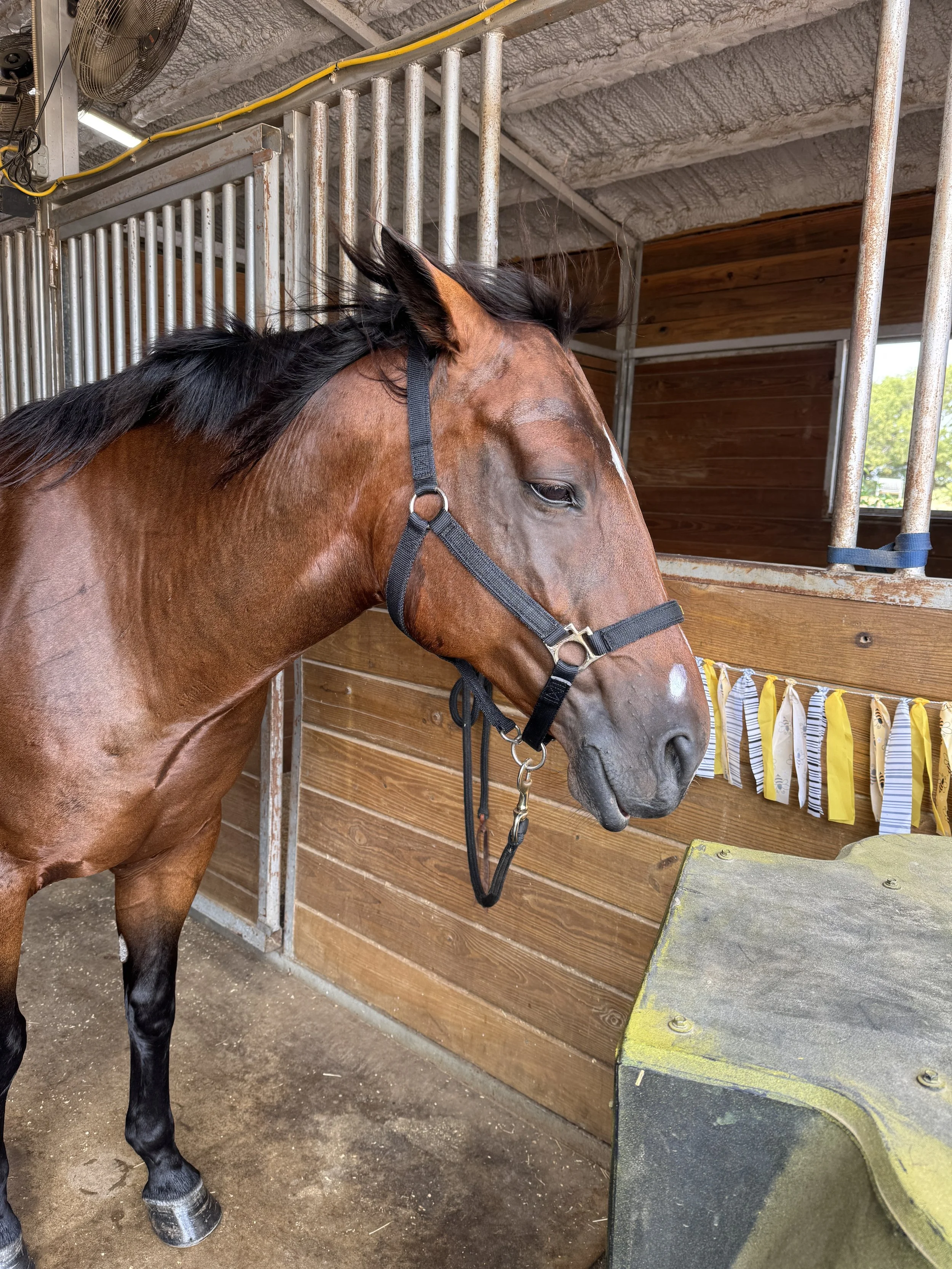
Sedation or just bliss? The Portacooler is still Bee’s favorite place to stand after her workout rinse off.
Barn Wisdom and Science Can Coexist
I love that horse people ask these questions.
Not because we're trying to challenge old barn wisdom.
Quite the opposite.
I want to understand why.
Sometimes the advice turns out to be more myth than medicine.
Sometimes there's solid science behind it.
And sometimes the answer lands somewhere in the middle.
This week's conversations reminded me that caring for horses isn't about blindly following every tip we hear around the barn. It's about asking questions, listening to experienced horse people, trusting our veterinarians, and learning enough to make good decisions for the horse standing in front of us.
Bee, thankfully, handled her deworming just fine this week.
She reminded me once again that every horse is an individual.
And that may be the best piece of barn wisdom of all.
Bonus Birdie’s Buzz: Birdie's Growing Up
Speaking of things thriving this summer...
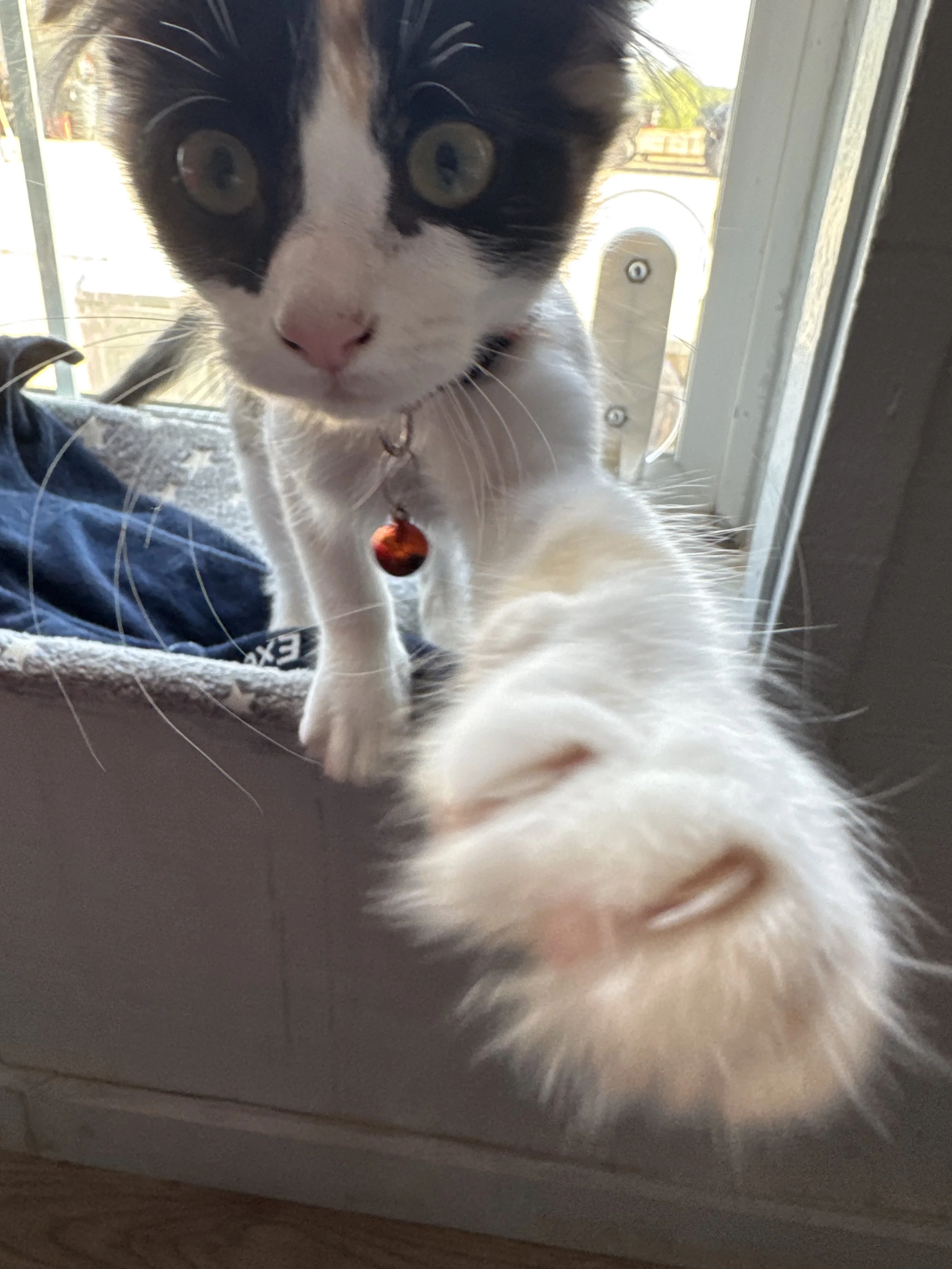
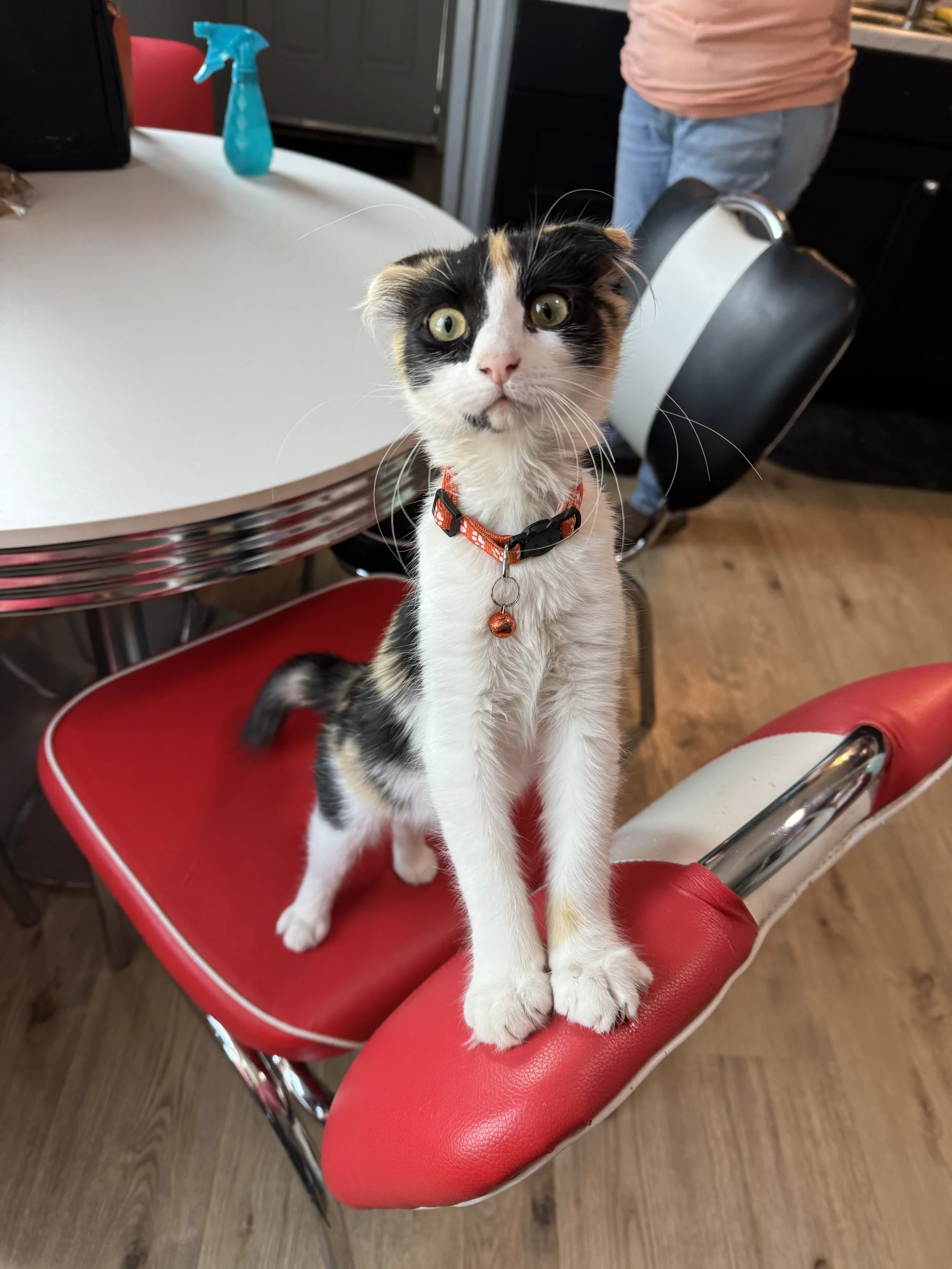
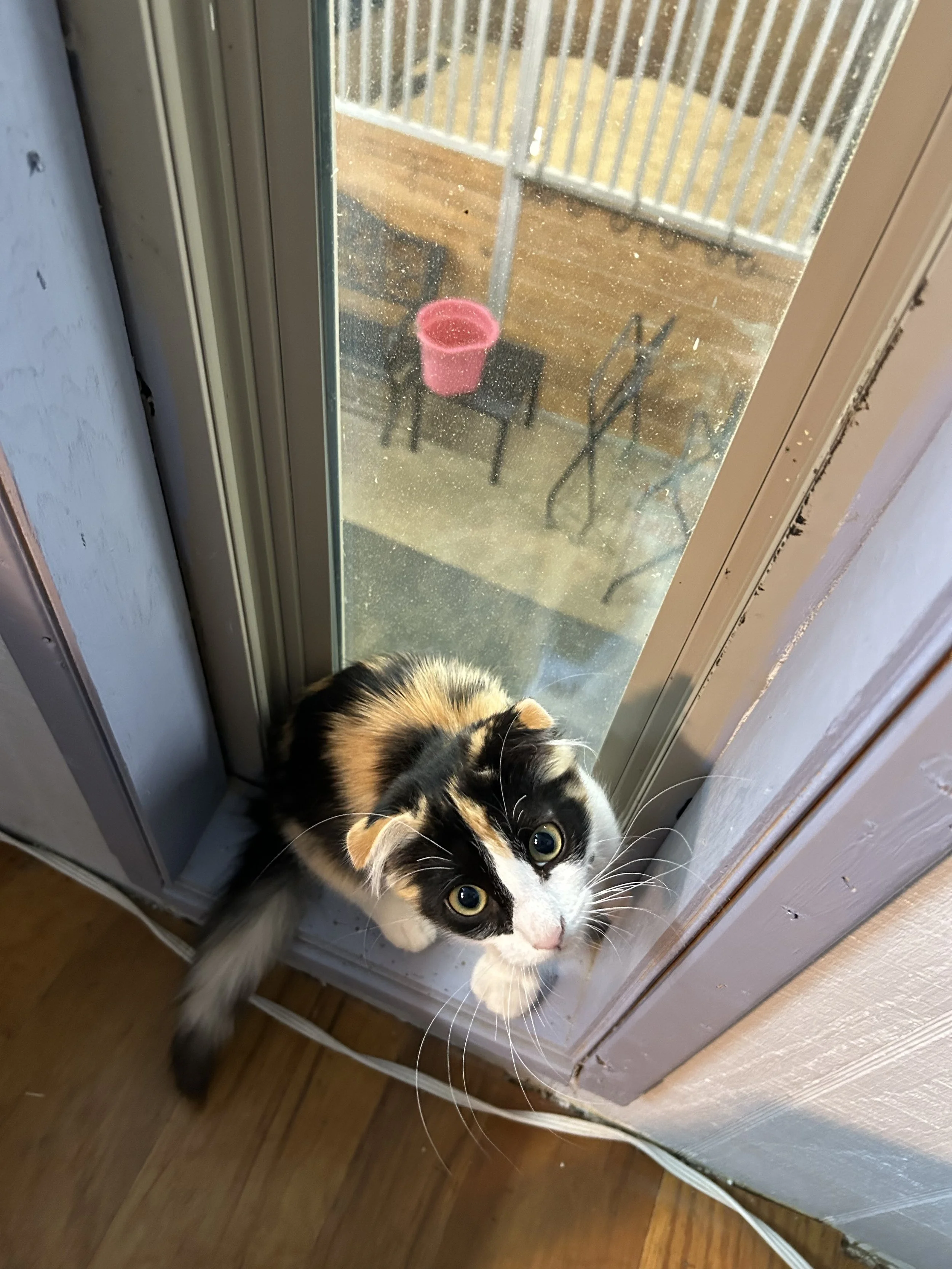
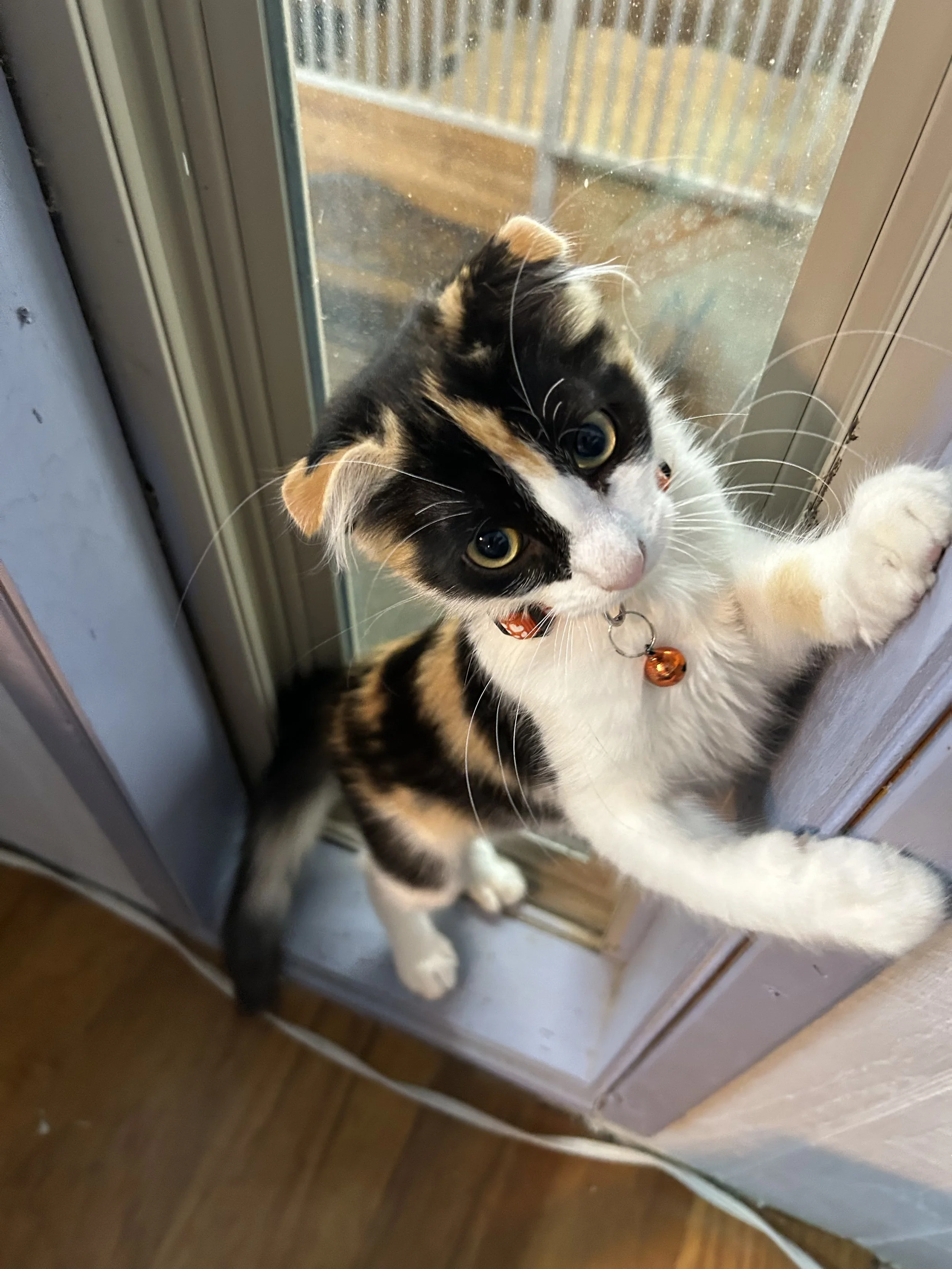
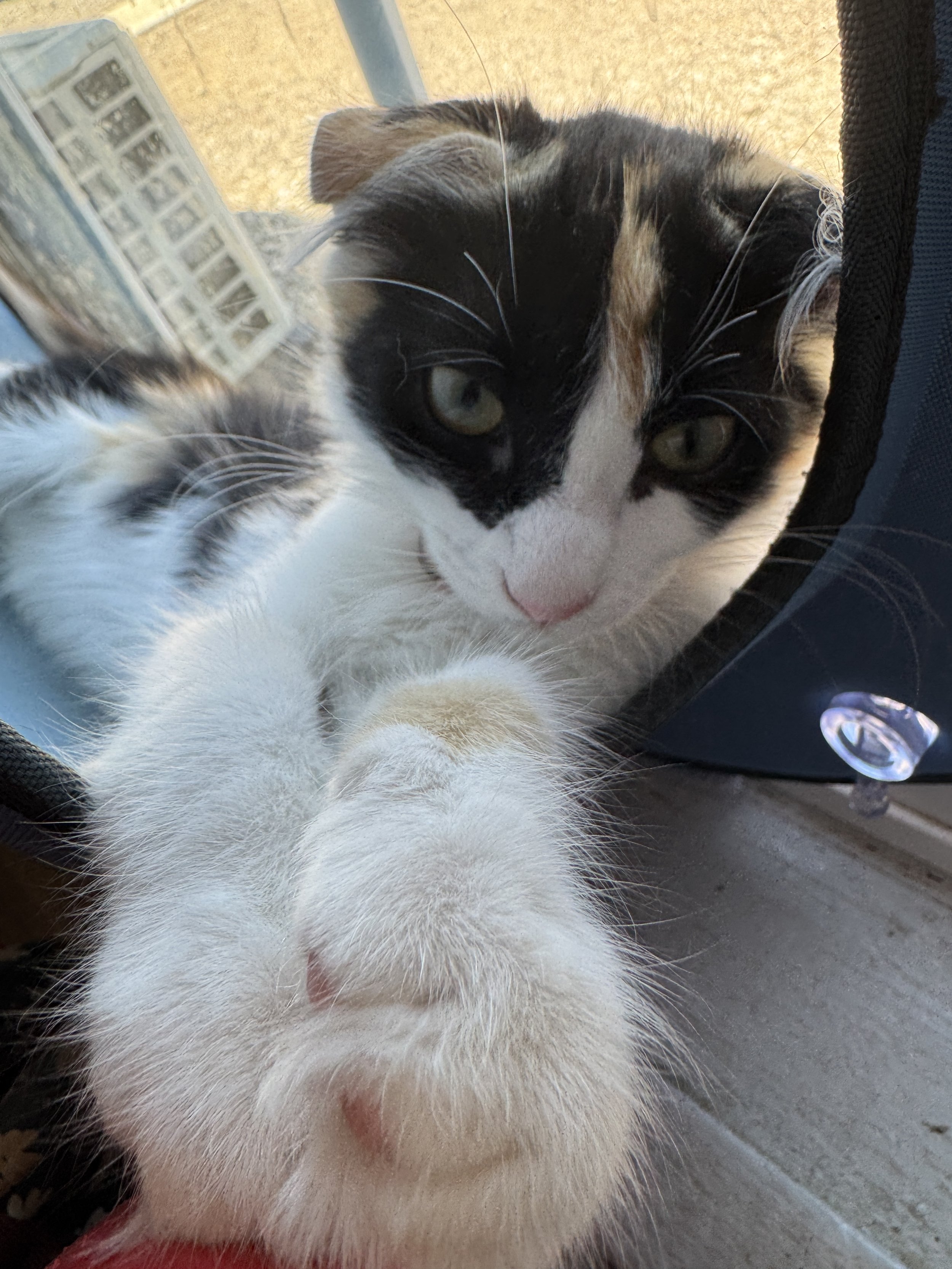
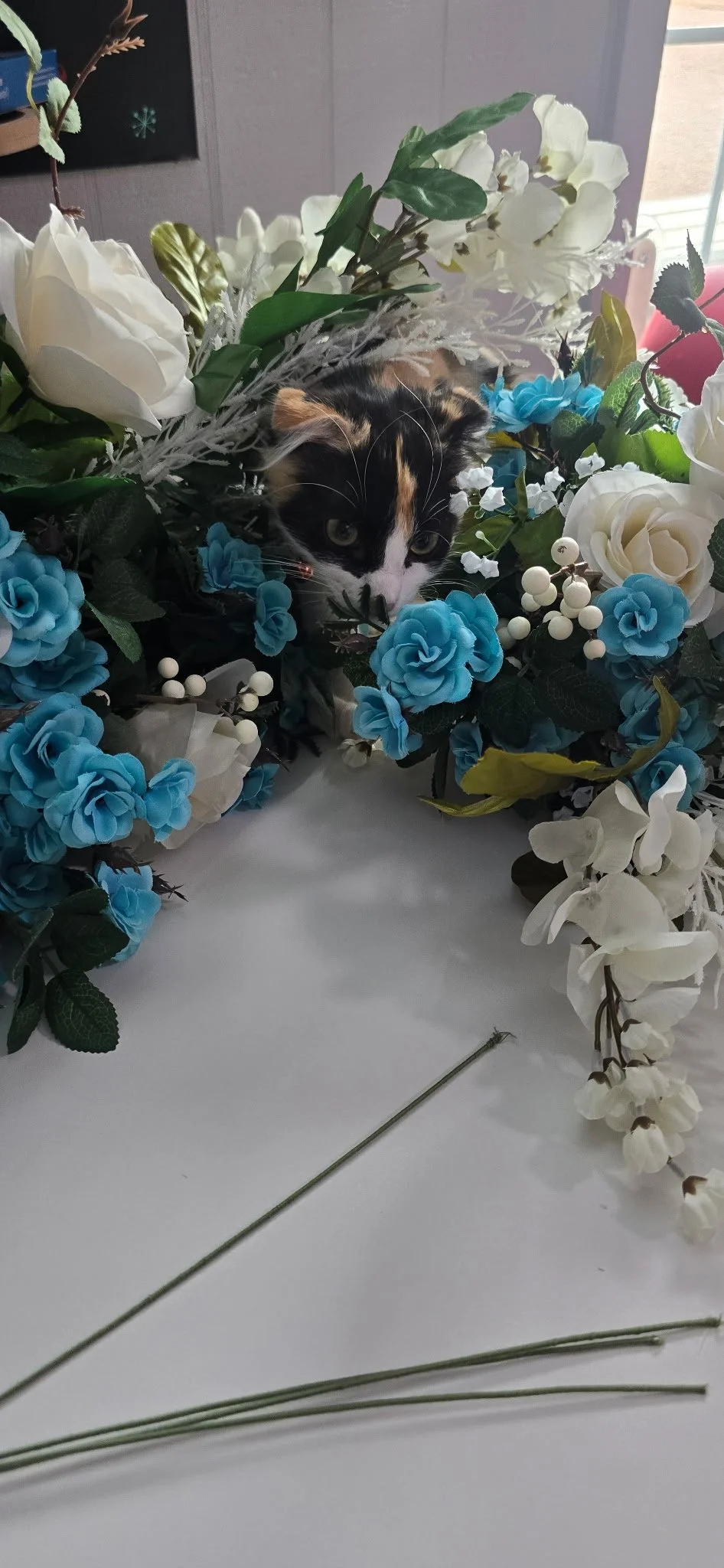
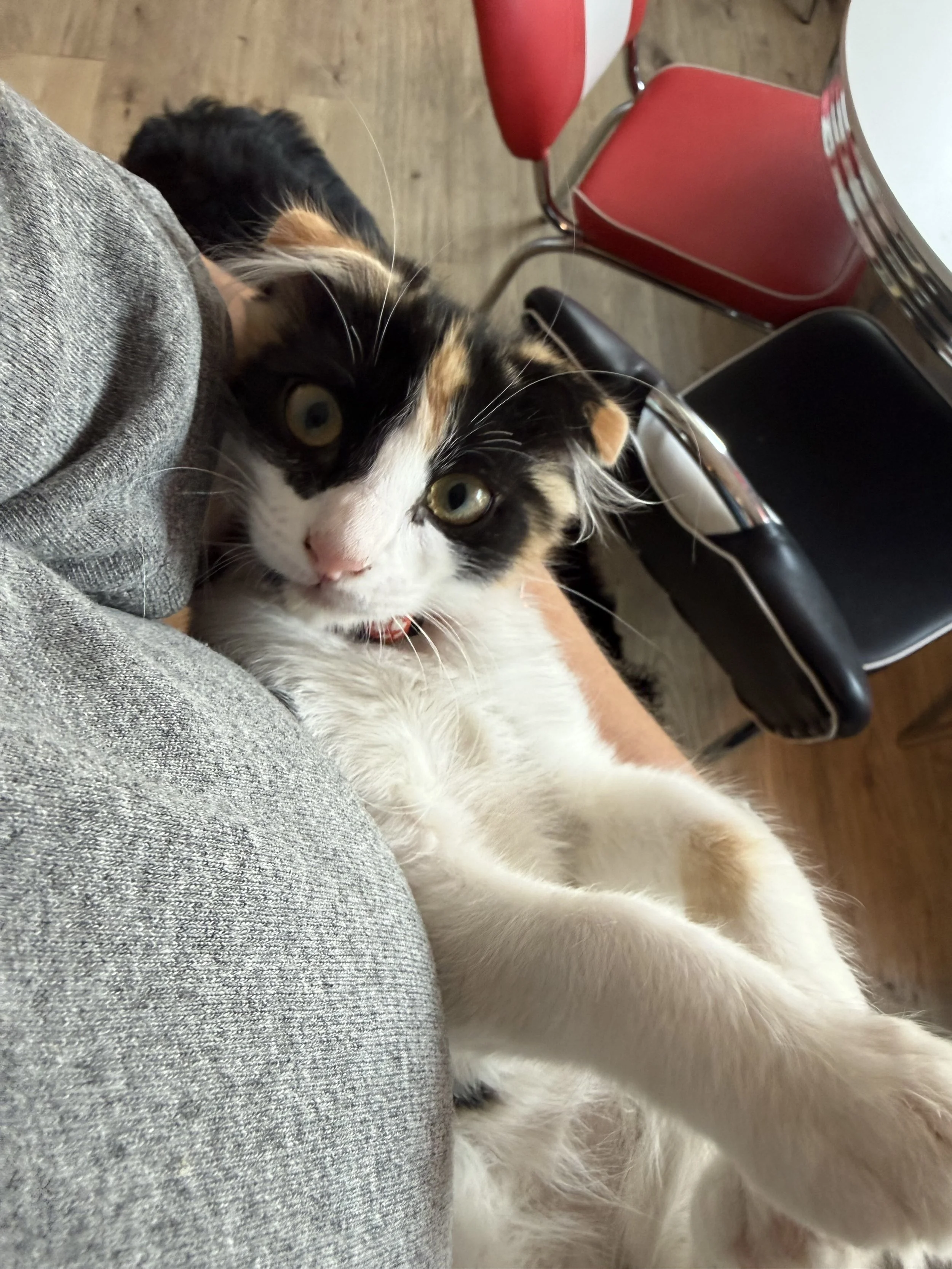
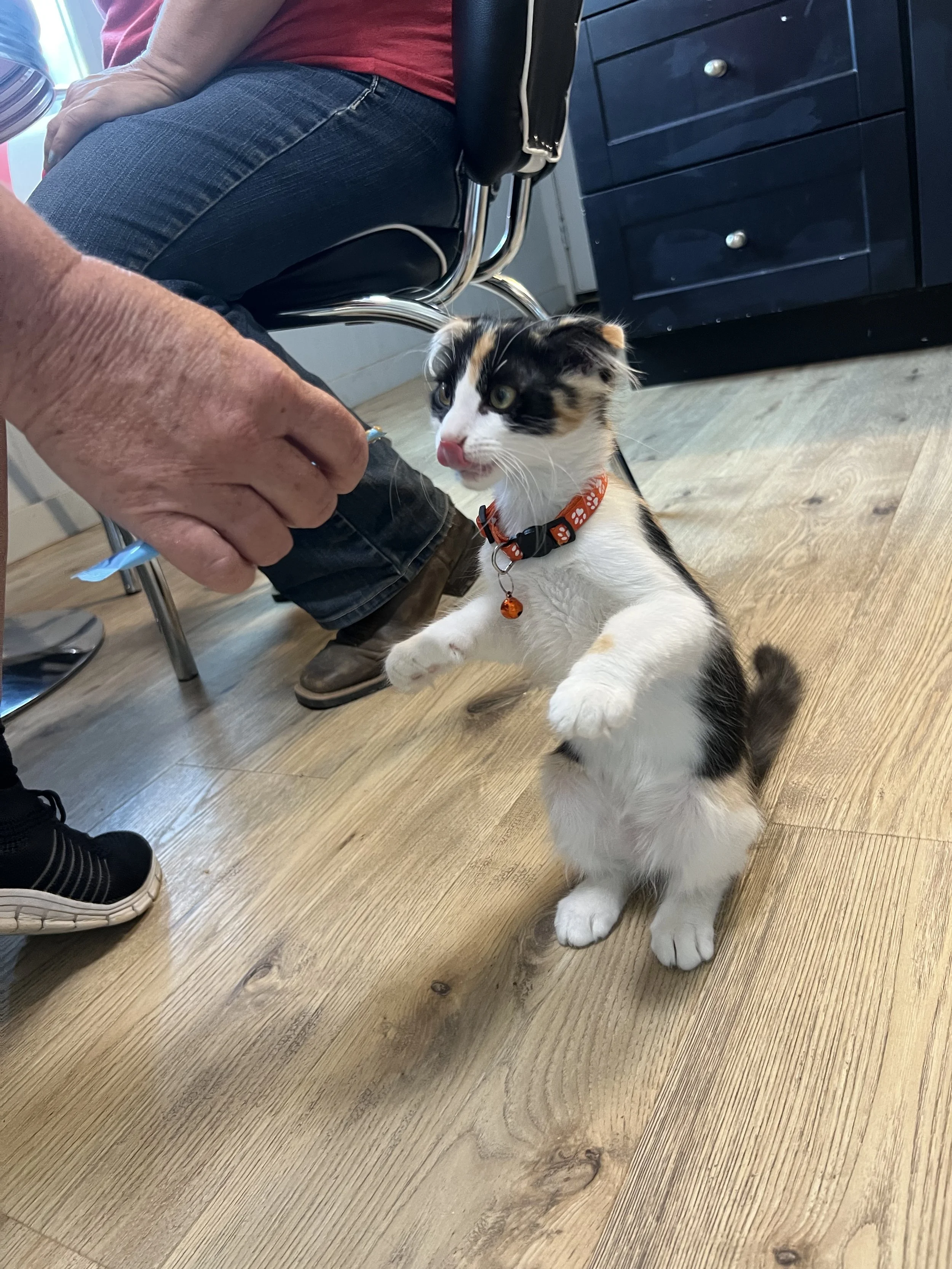
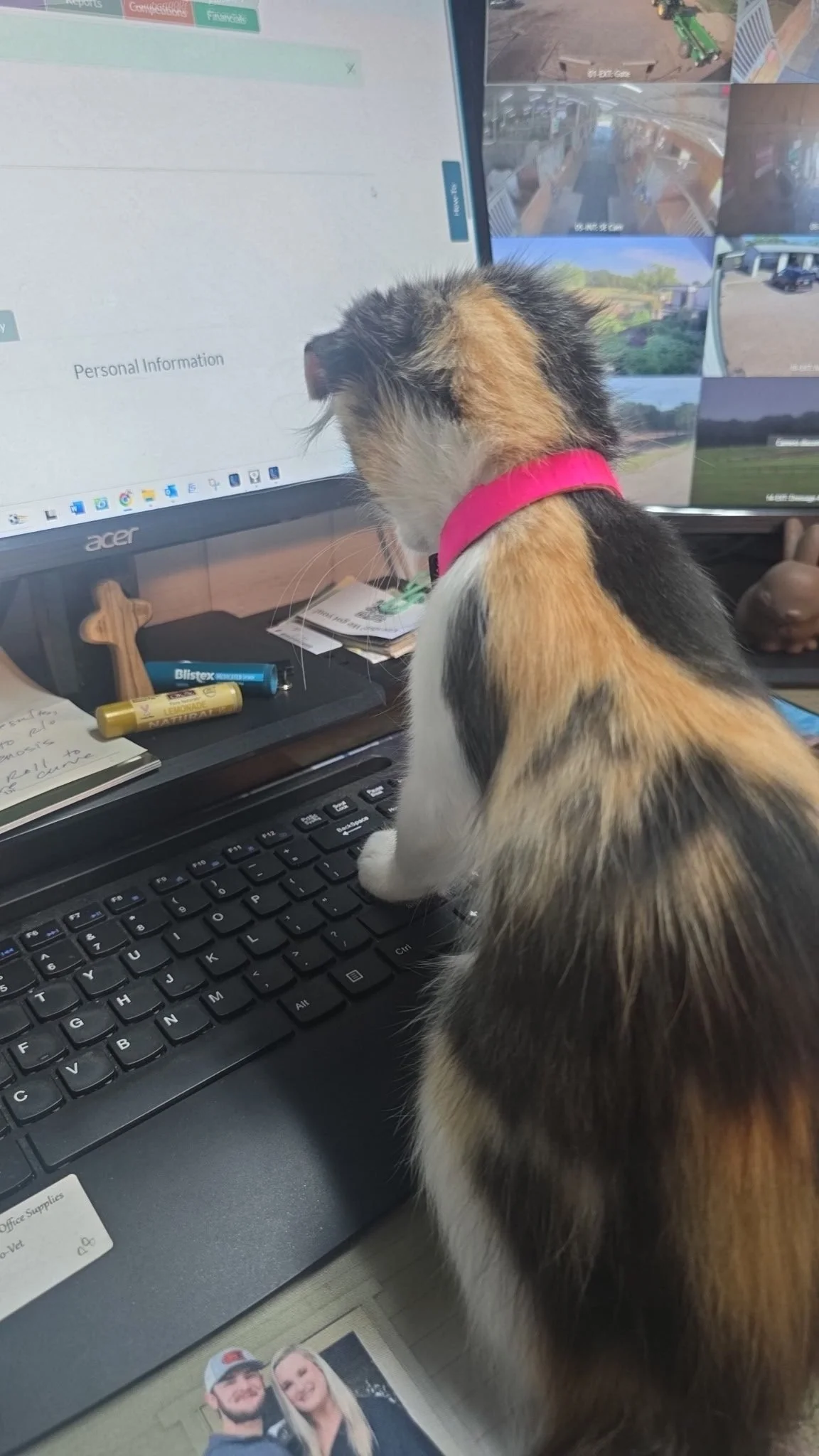
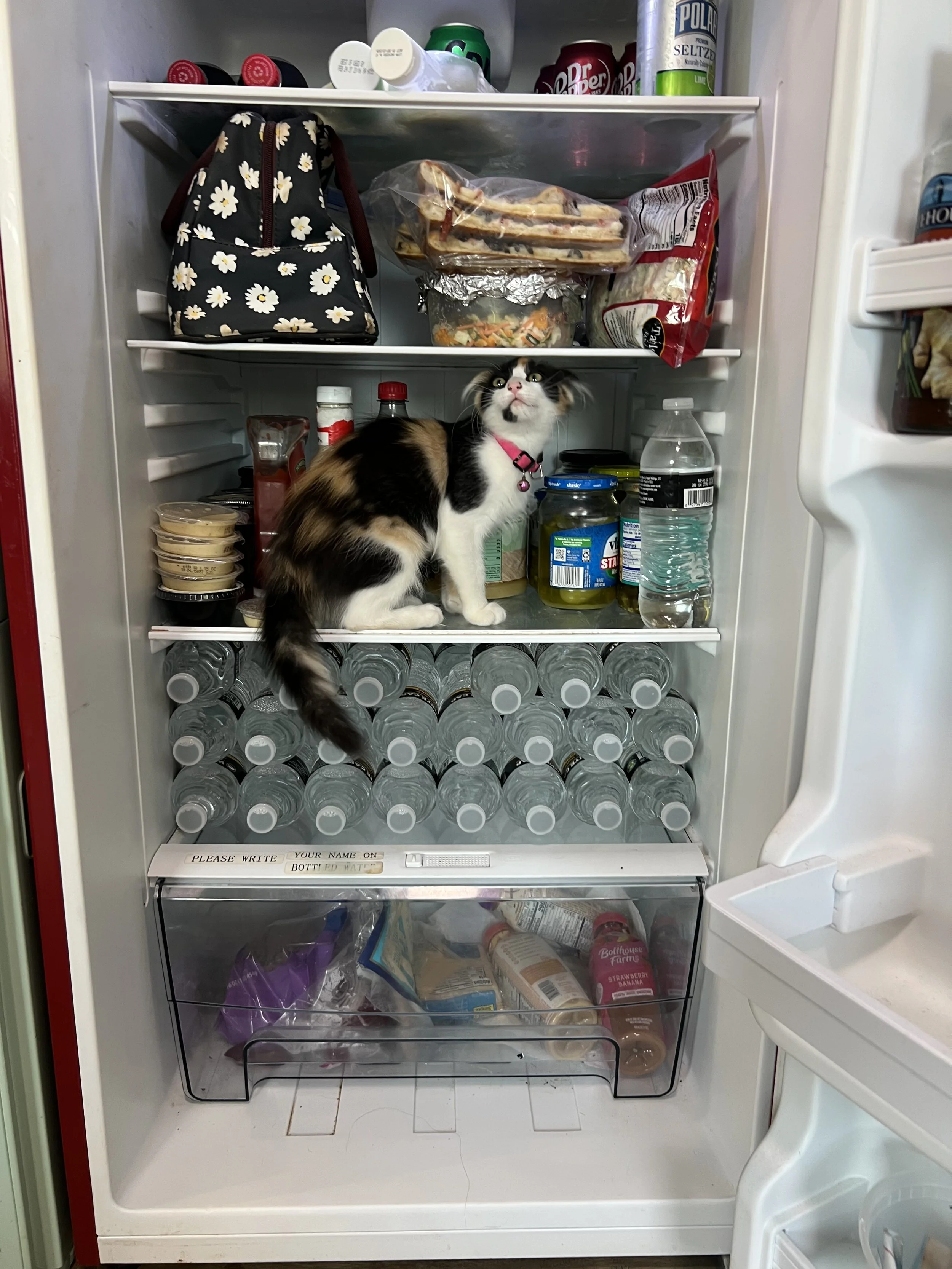
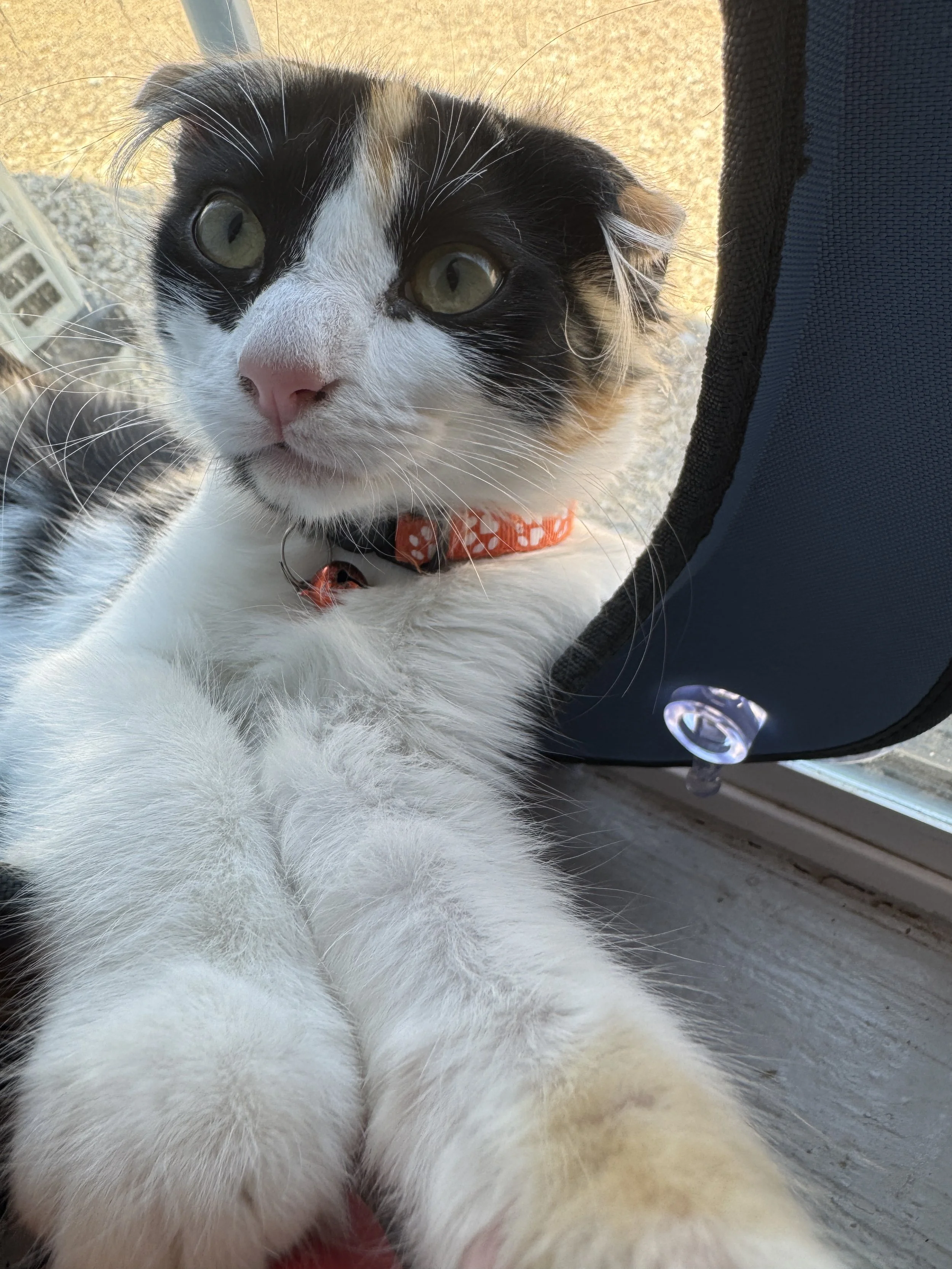
Our little barn kitten, Birdie, is no longer quite so little.
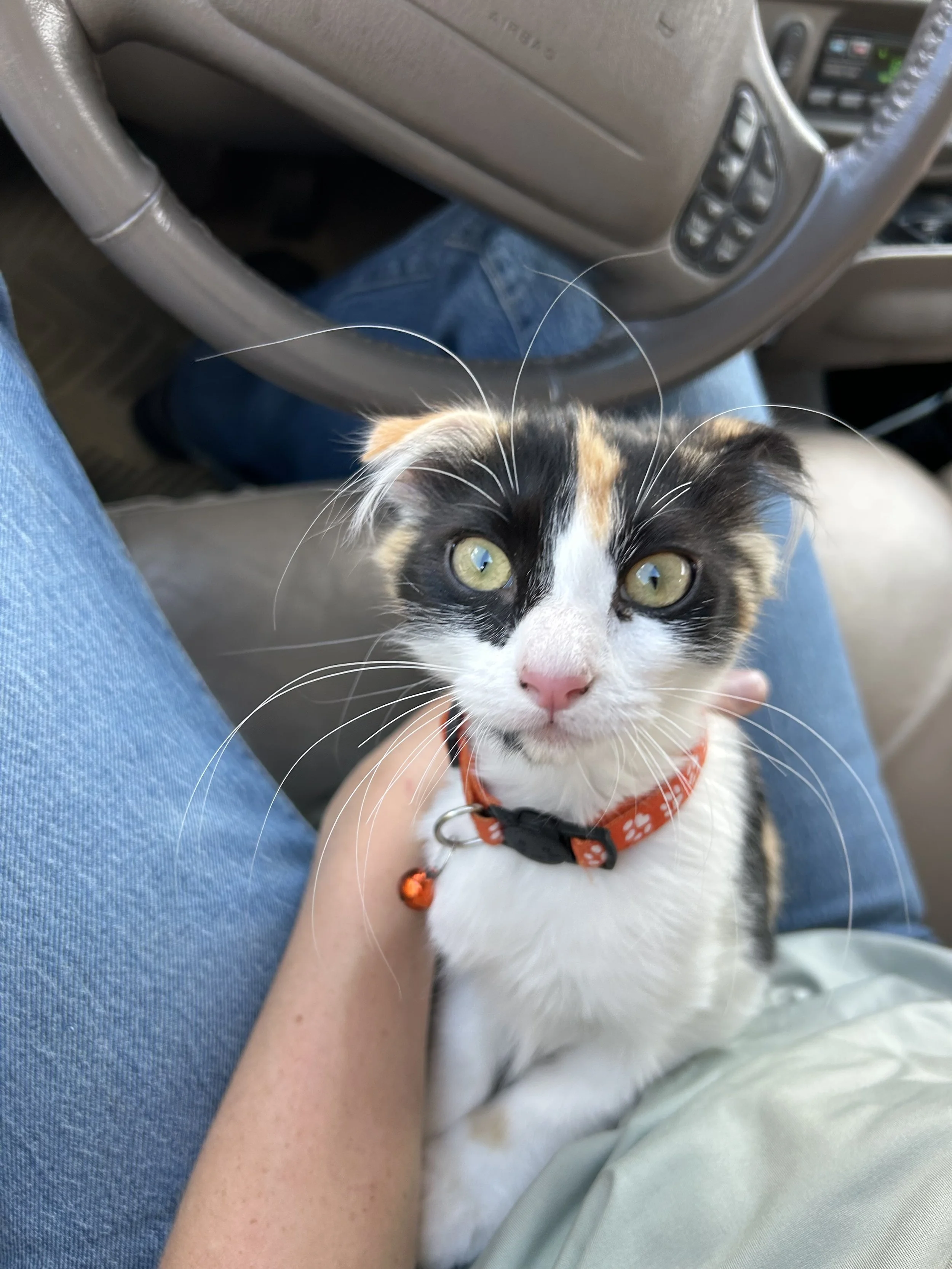
It's hard to believe the tiny kitten that Lori rescued from a vehicle engine just a few weeks ago has grown into such a confident little character. She's healthy, curious, and absolutely convinced the entire barn exists for her entertainment.
Thankfully, she has plenty of people willing to play along.
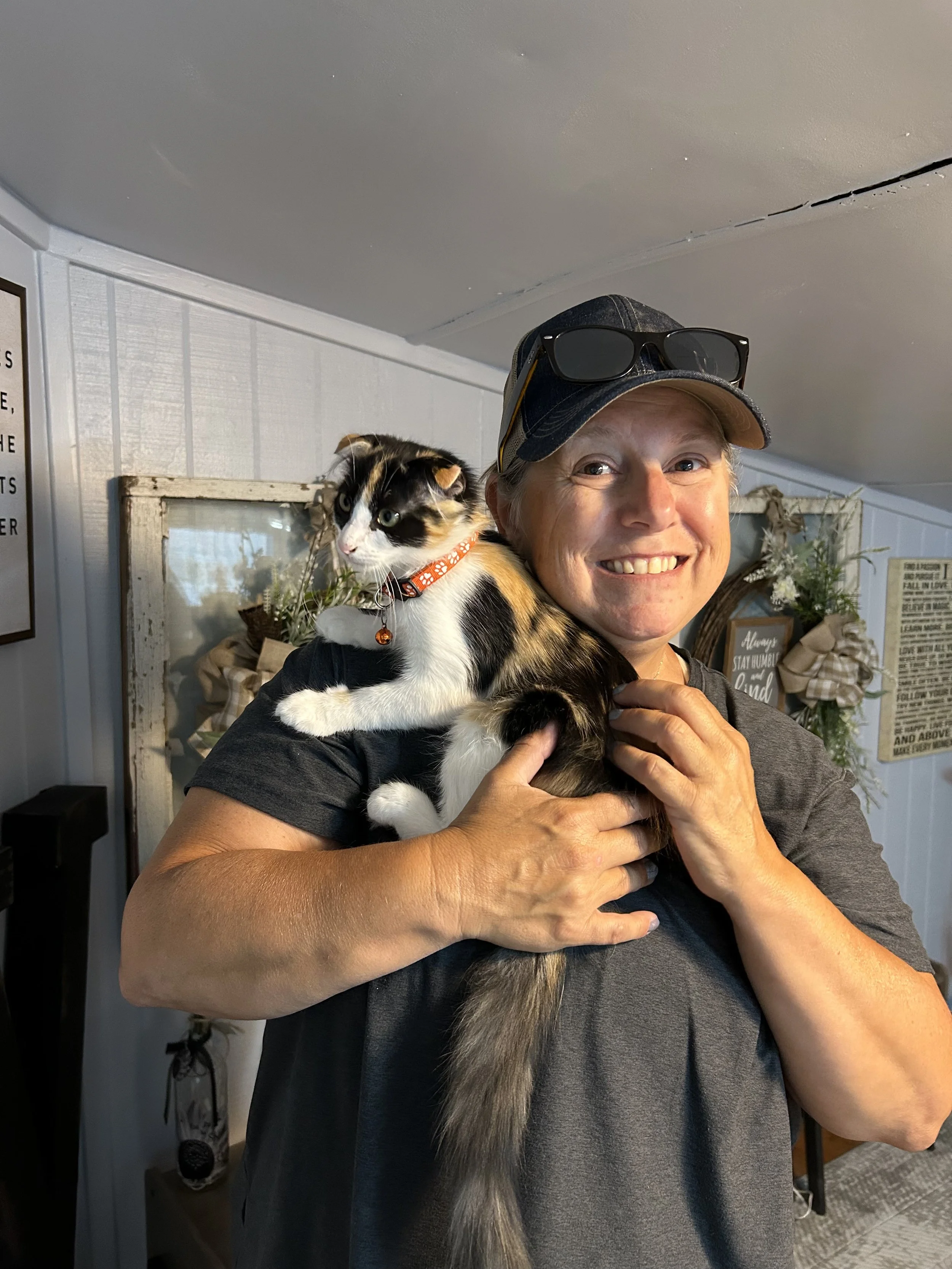
Between Lori, Allyson, Connie, Lauren, and the rest of us "regulars," Birdie has accumulated quite the collection of barn moms. If she's awake, someone is usually stopping by for a cuddle, tossing her a toy, or offering a little attention. And if she's asleep...well...we try not to interrupt her beauty rest.
Like most kittens, she operates on a very predictable schedule.
Run.
Pounce.
Climb.
Cause a tiny bit of chaos.
Eat.
Crash.
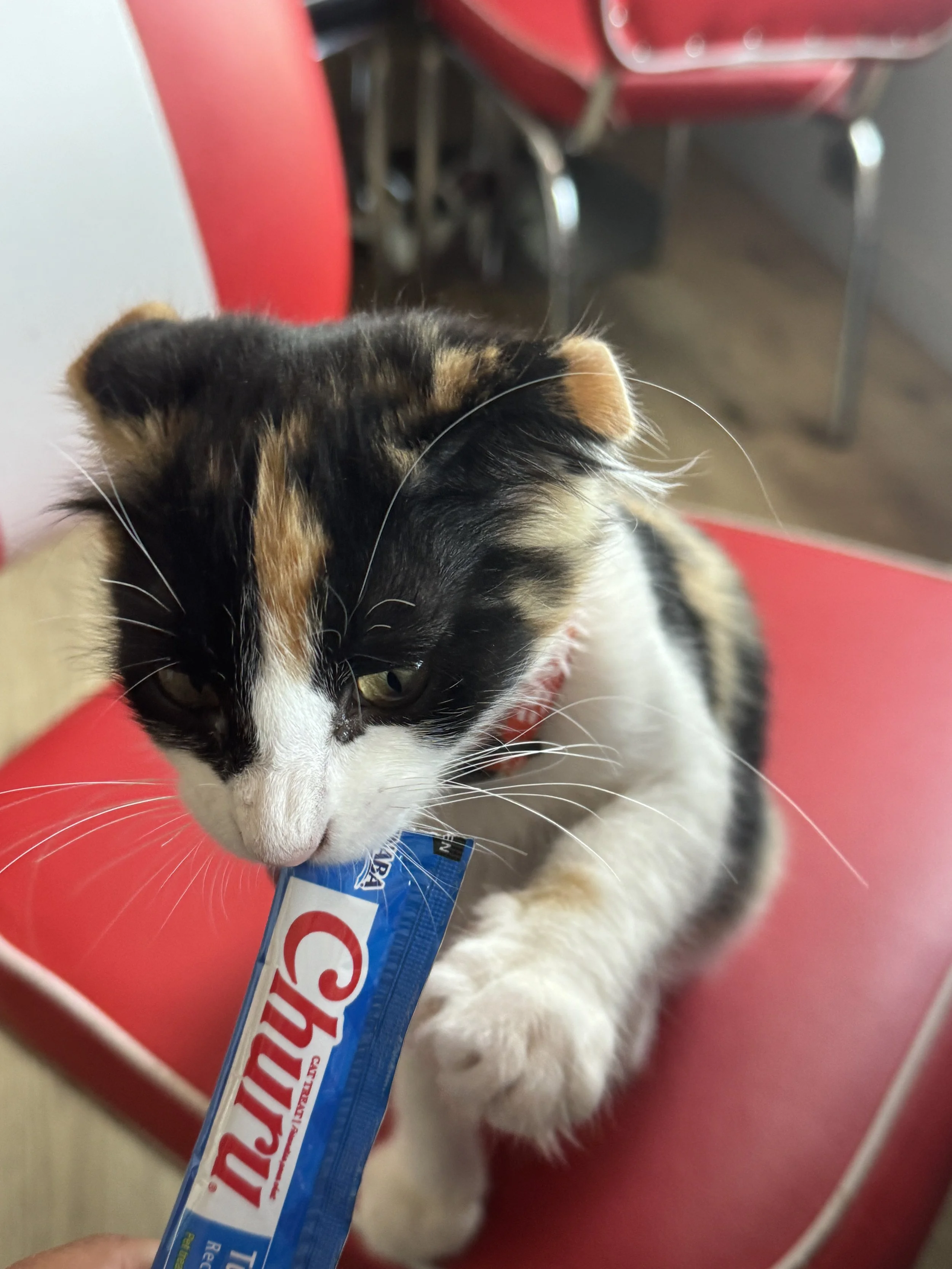
Her favorite nap of the day usually comes after a perfectly timed mid-day snack, right before all of us everyday barn dwellers gather for lunch together.
Yes...we really do eat lunch together.
How else do you think I come home every week with enough material to write this blog?
Birdie mastered the litter box almost immediately, has already had her first round of vaccines, and she'll be getting spayed in just a few weeks. She's growing up fast.
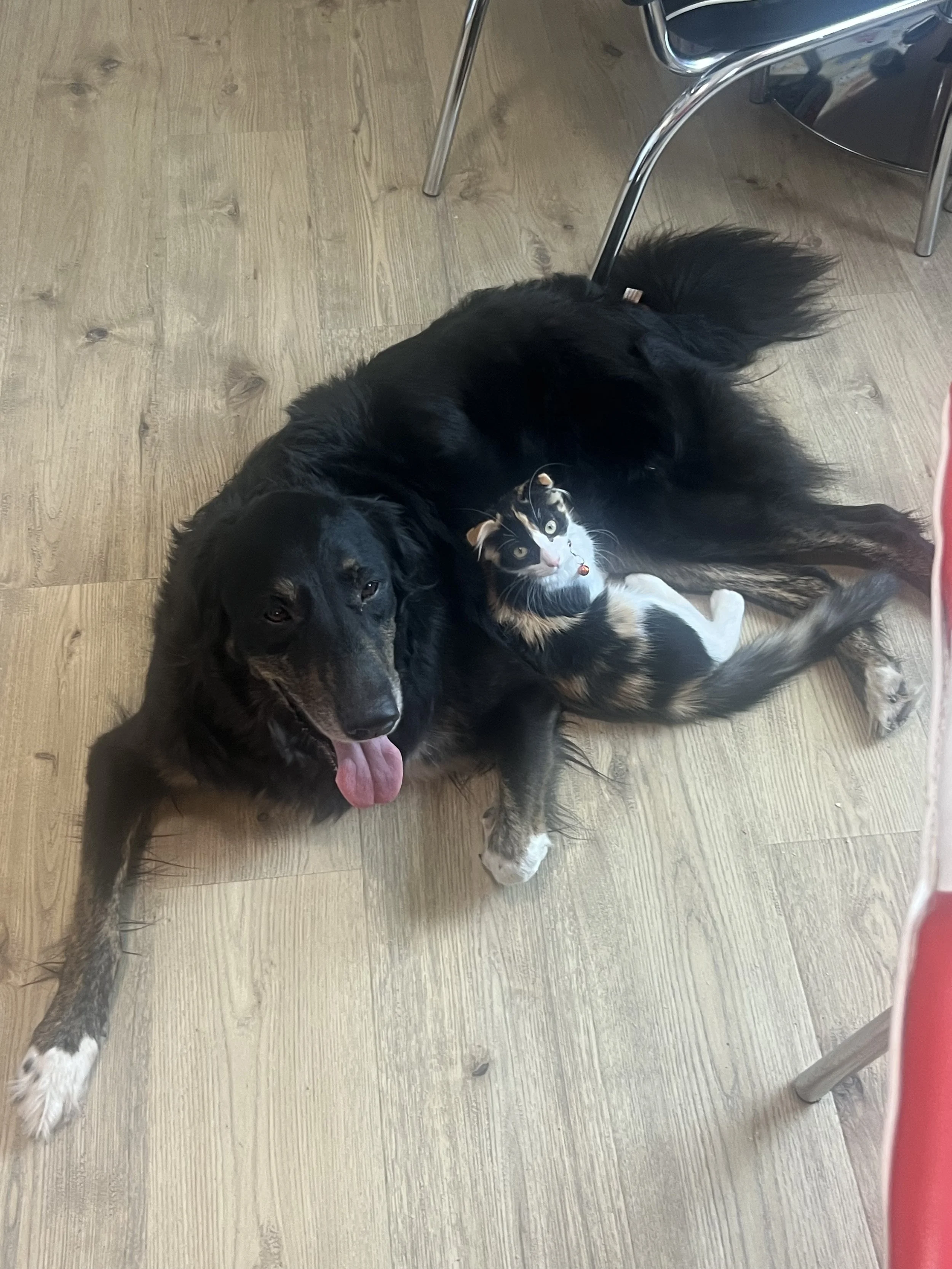
She's also made a best friend.
Lauren often brings her sweet dog, Tucker, to the barn in the evenings, and watching those two play together has become entertainment for everyone nearby. It's proof that friendships sometimes come in unexpected packages.
Allyson has also taken Birdie home for a few sleepovers where she gets to spend time with Rudy the bunny. Apparently, kittens and rabbits can become pretty good roommates when introduced the right way.
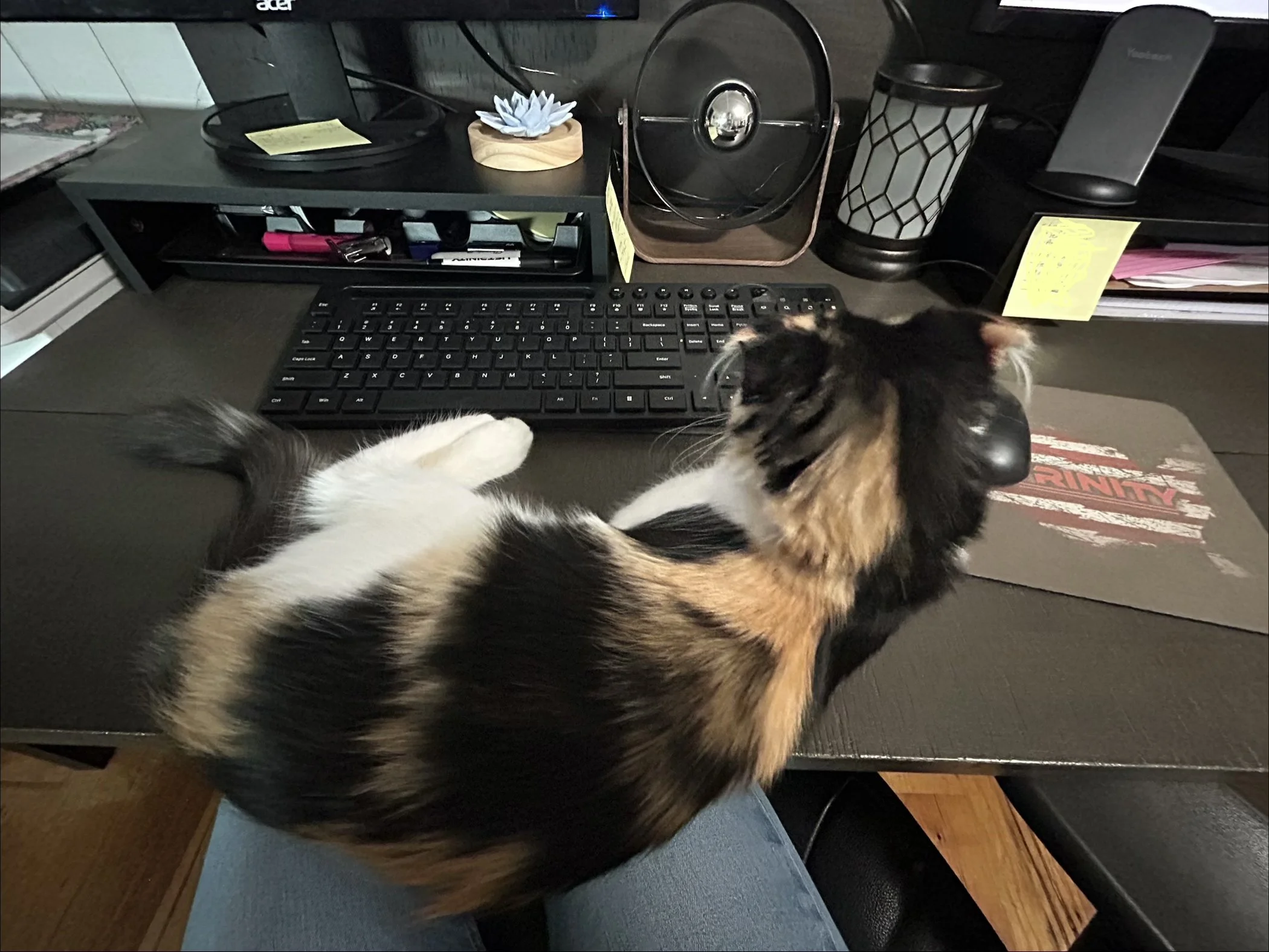
Birdie remains affectionate...on Birdie's schedule.
If you arrive early in the morning after she's spent the night ruling her little kingdom, you're much more likely to get cuddles. Later in the day, she's far too busy supervising the barn to slow down for much affection.
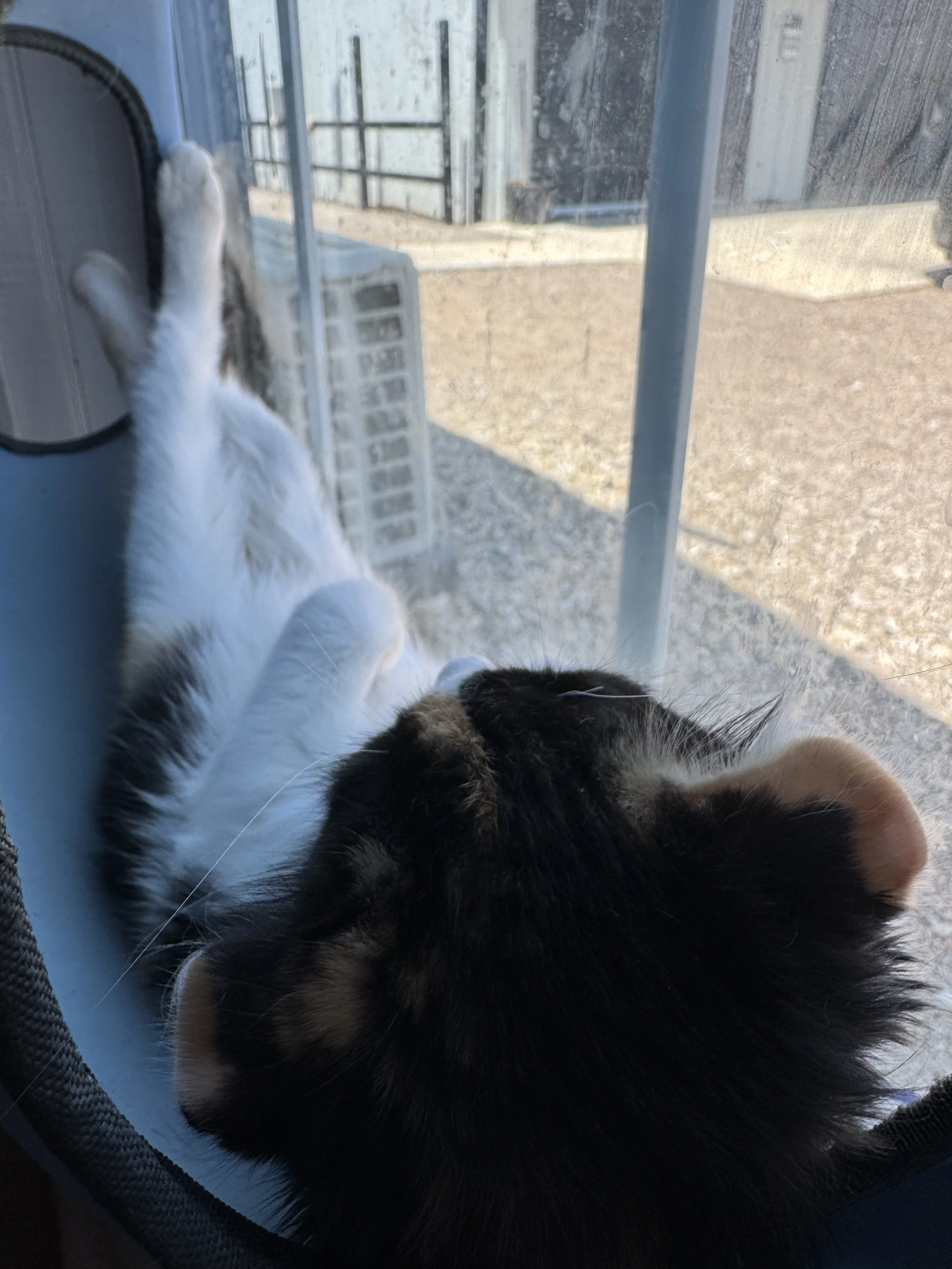
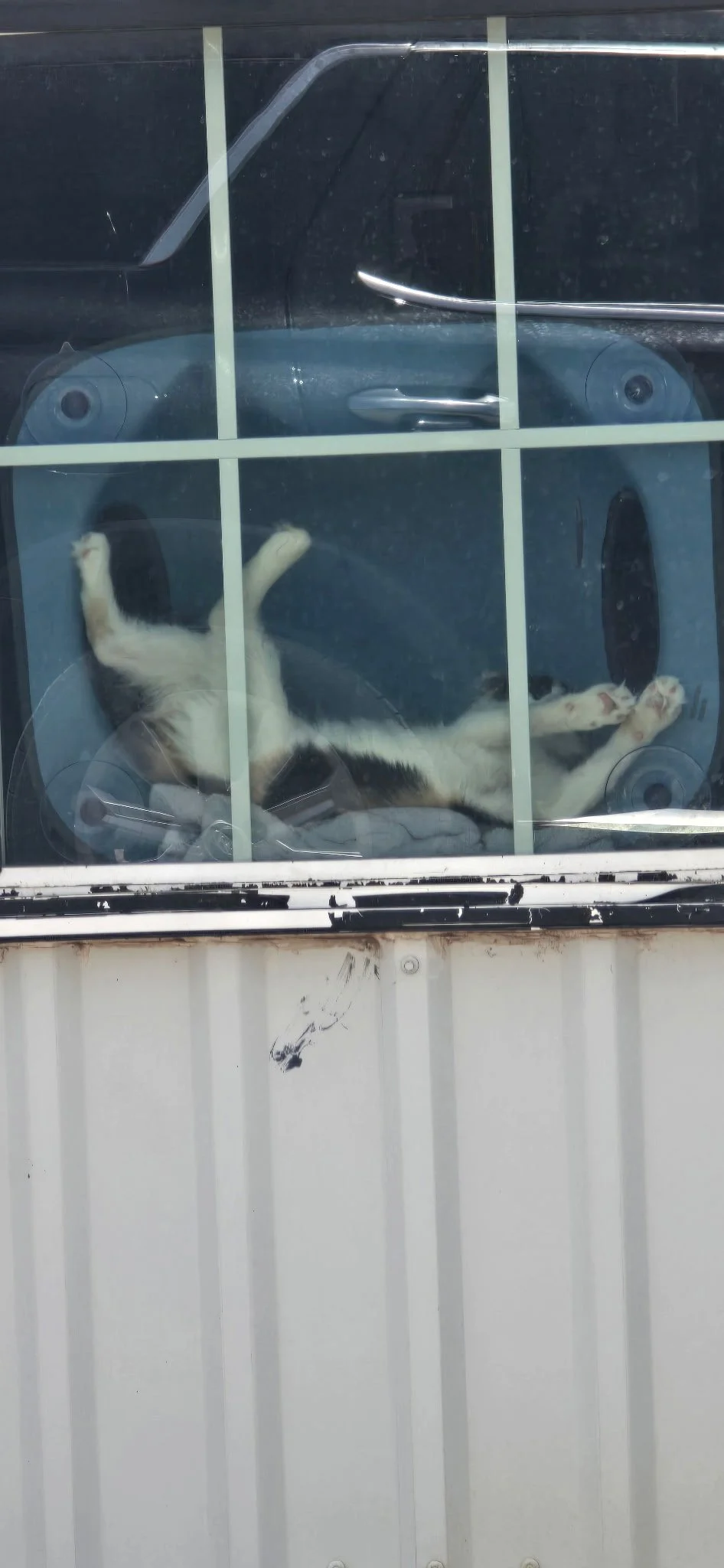
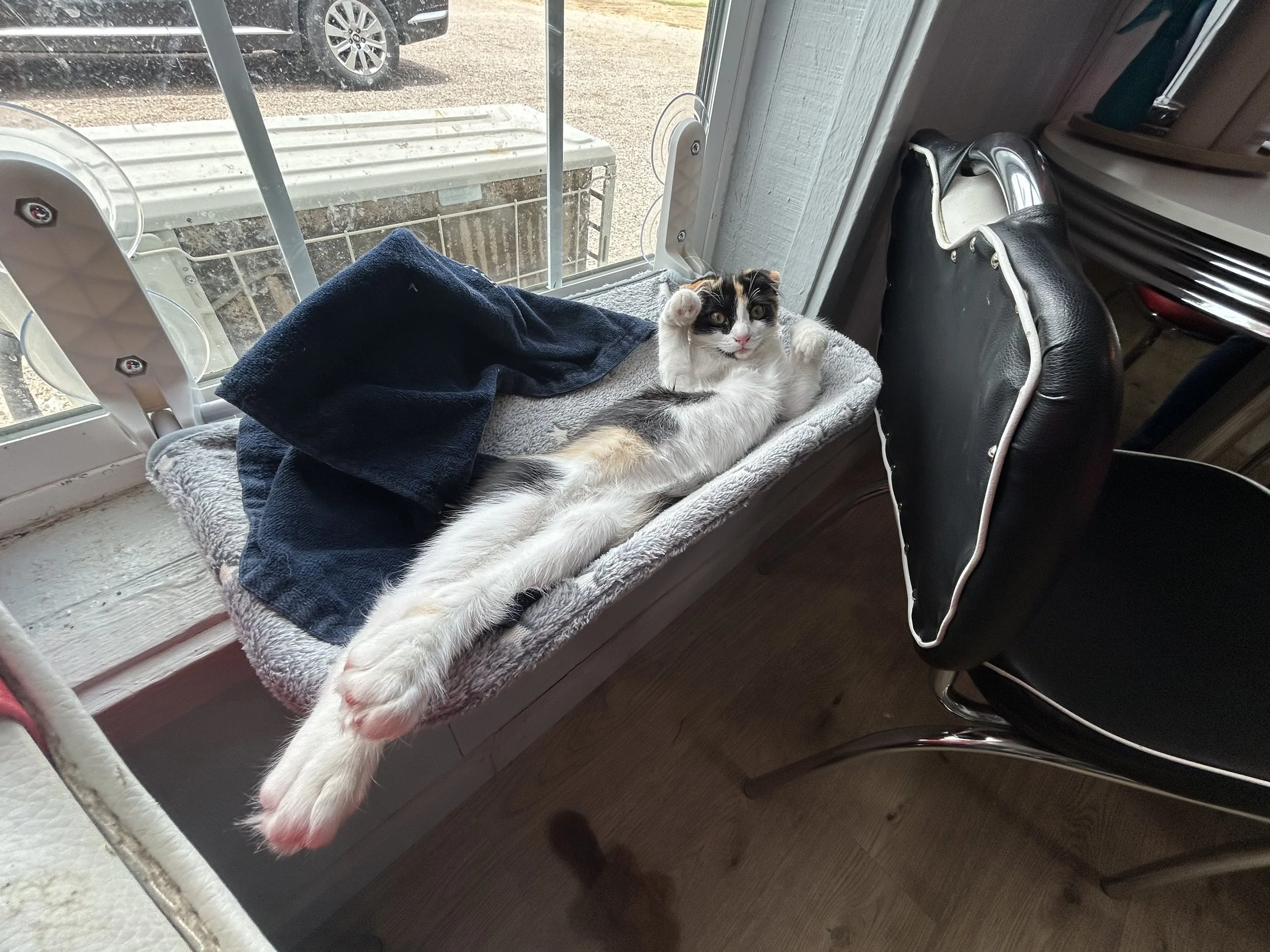
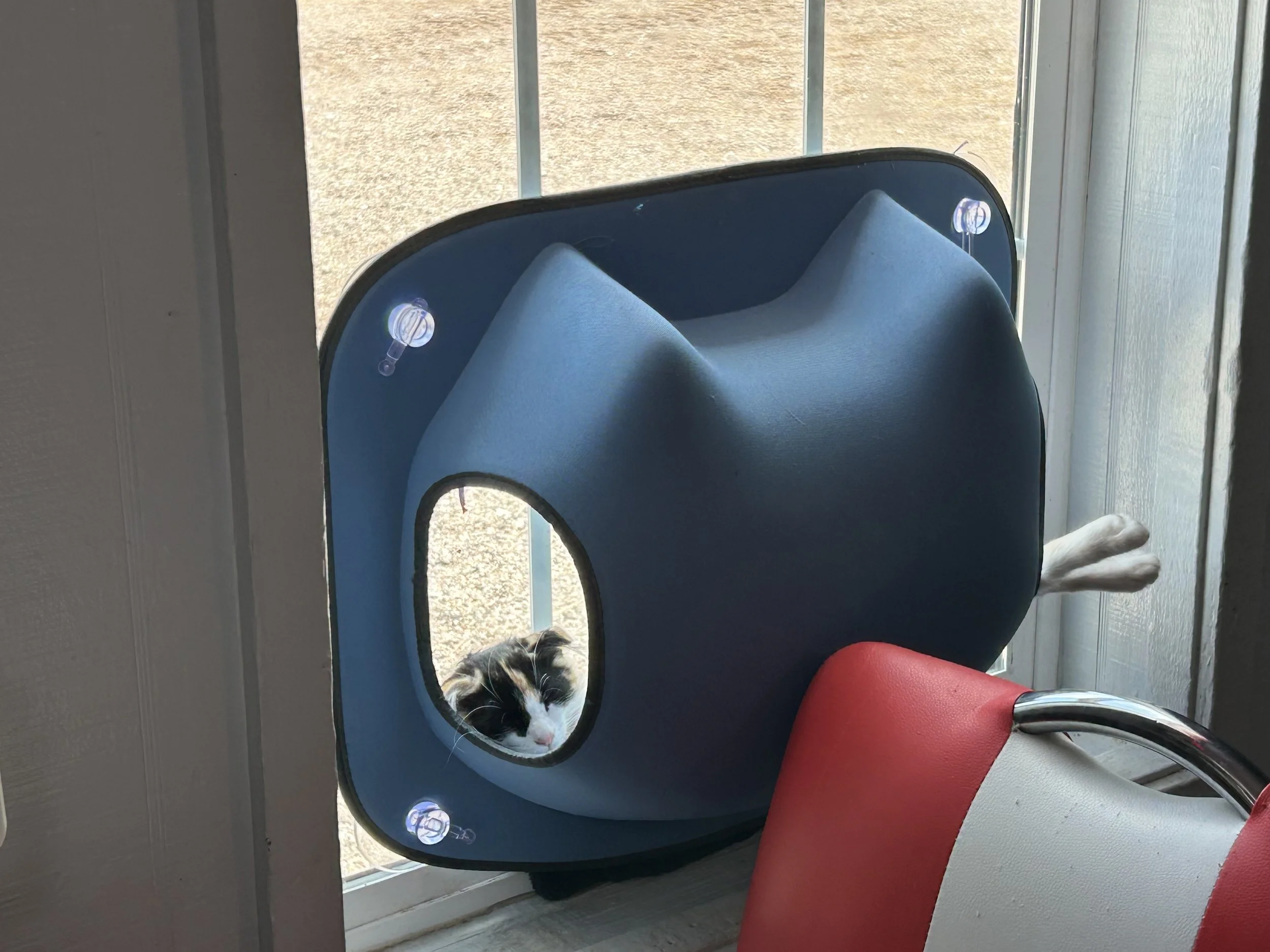
Her favorite office overlooks everything from several window perches where she can monitor both the inside of the barn and everything happening outdoors. (The perches are inside the lounge windows, before anyone pictures Birdie hanging from a tree branch.)
Lori has even started taking her outside around the barn offices so she can safely explore the world a little at a time.
The rest of us?
We're not nearly brave enough for that.
We're much too worried she'd either disappear under a trailer or decide a horse's tail looked like the world's greatest cat toy.
Of course, Birdie has also developed a signature sleeping position.
Imagine Kate Winslet in Titanic saying, "Paint me like one of your French girls."
Now replace Kate with a lanky kitten stretched across a window perch, legs dangling over both sides, completely unbothered by gravity.
It's become such a regular occurrence that we've joked about starting an OnlyPaws page for her.
Relax...
It's just a joke.
Although judging by the number of people who stop by just to see what Birdie's doing, she'd probably have more followers than the rest of us combined.
Somehow, that tiny kitten has become one more reason the barn feels like home.