
October 9, 2026: How Does a Horse Sleep Standing Up?
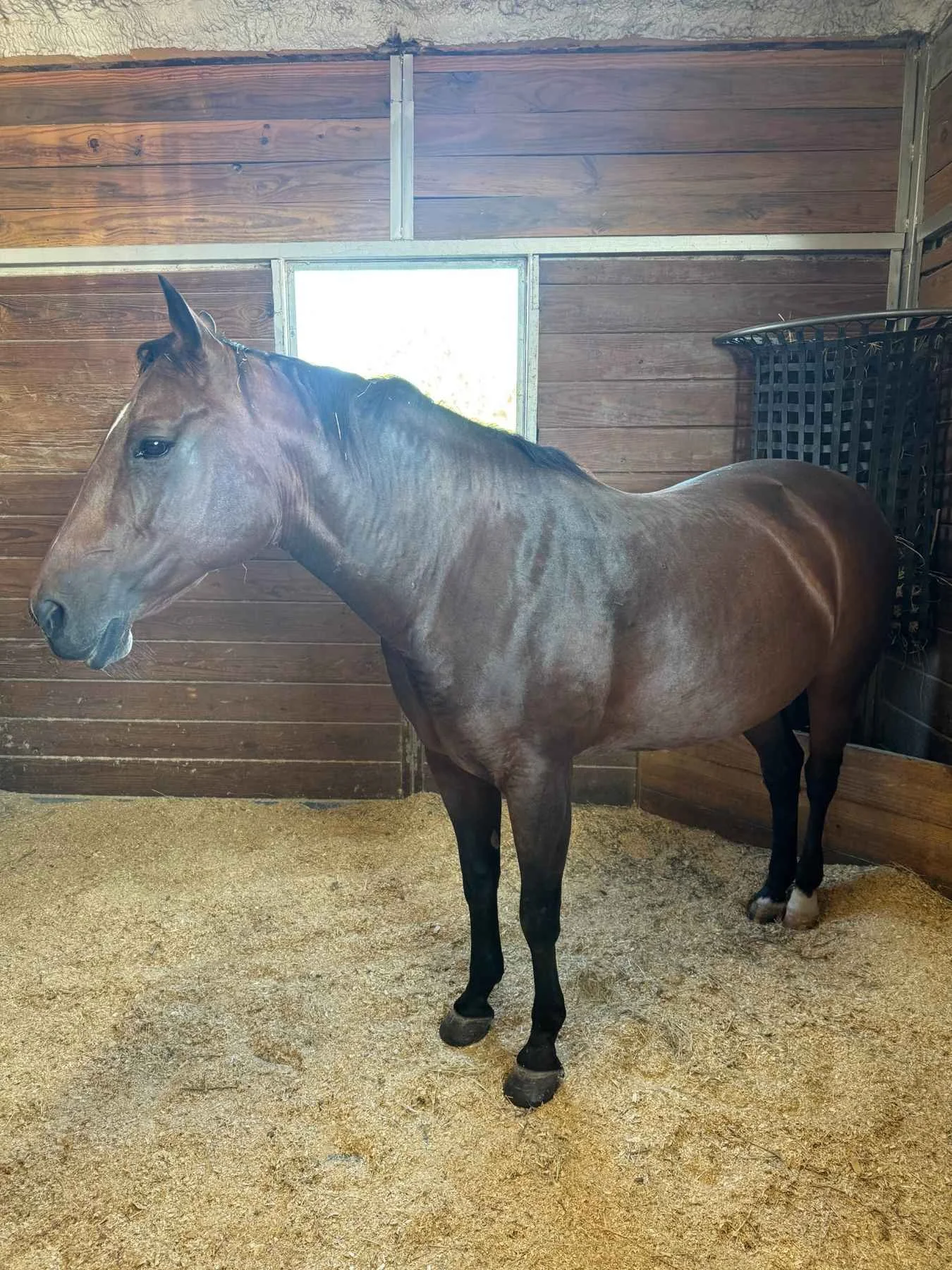
I caught Bee sleeping this week.
This should not have been particularly exciting. Every living creature sleeps. But horse people will understand why catching your horse really, truly asleep feels a little like catching a teenager being sweet when they don't know you're watching. There is something oddly endearing about seeing a 1,000-pound animal completely off duty.
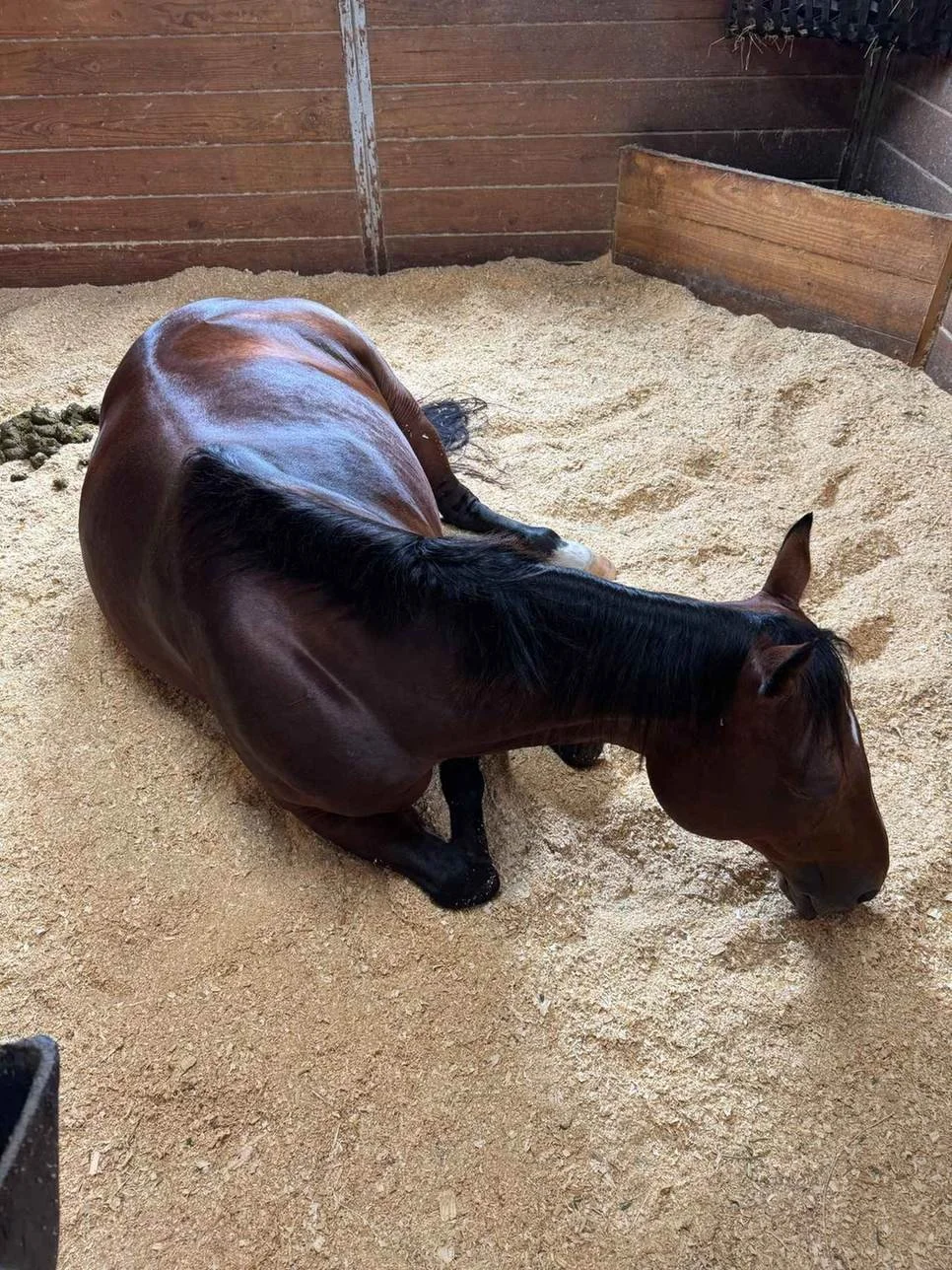
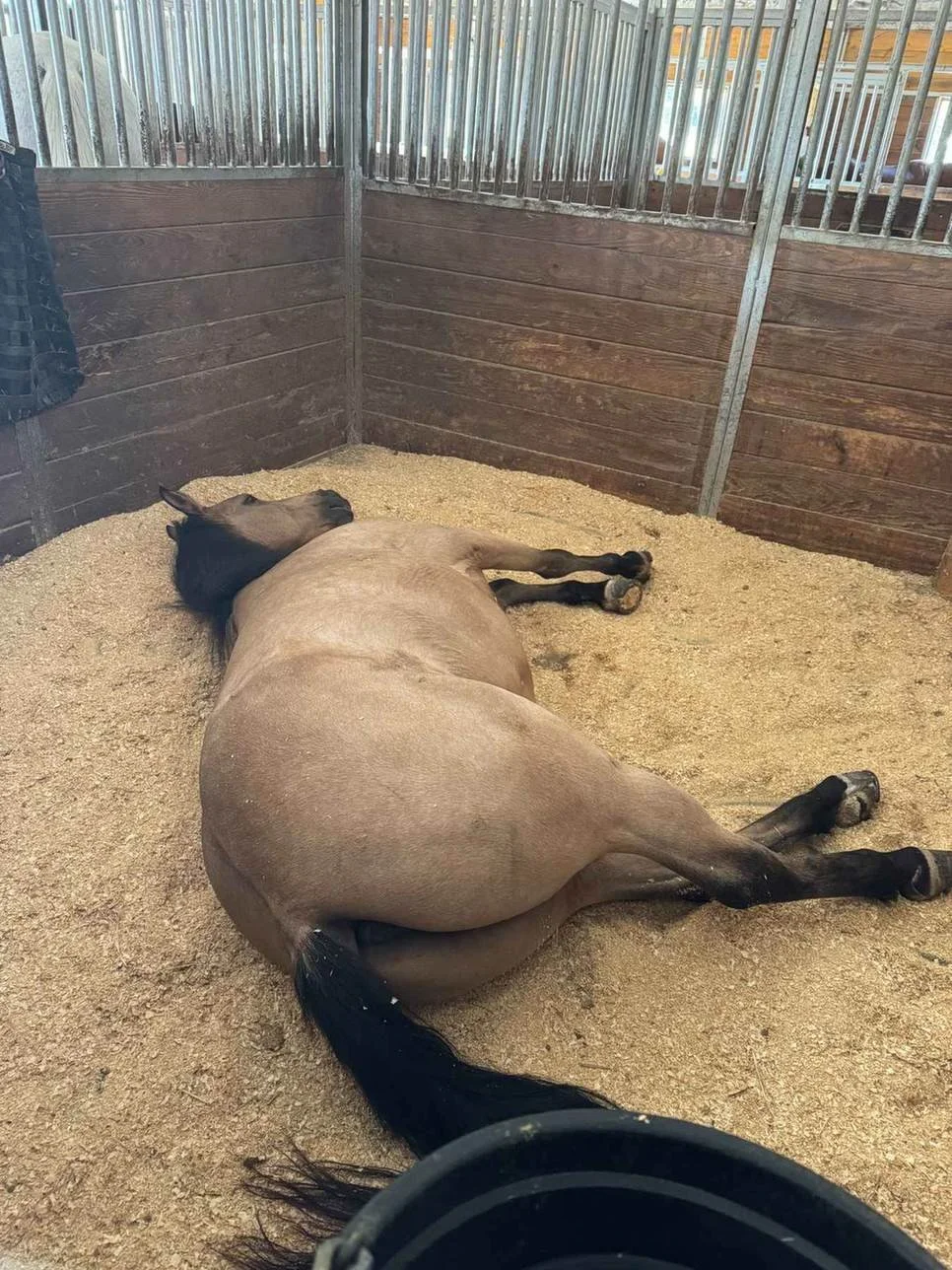
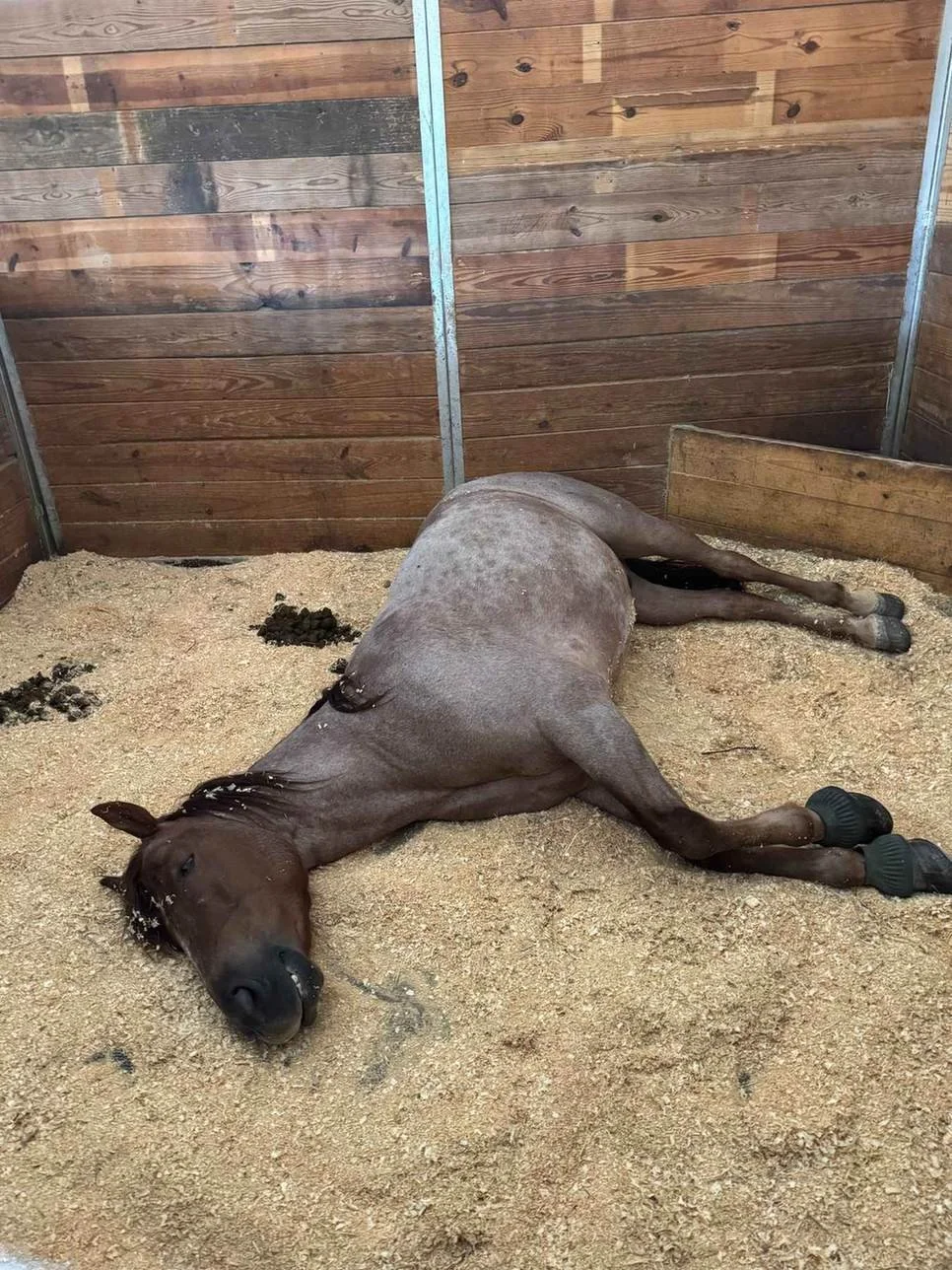
Bee has several levels of off duty. There is standing in front of her fan with her eyes open, but her bottom lip hanging so low she looks like she has just finished a very long shift at the factory. Then there is the position I caught her in this week: legs tucked underneath her, head getting lower and lower until eventually her nose was practically resting in the shavings. And then there is the full-body, flat-on-the-side, legs-stretched-out, eyes-closed position that makes a non-horse person wonder whether someone should call 911.
I've seen other horses at the barn sleep that way. I have photographic evidence. I have never seen Bee do it.
Which sent me down a rabbit hole: How exactly does a 1,000-pound animal sleep standing up, and why does it sometimes need to lie down?
Yes, Horses Really Do Sleep Standing Up
Horses have something called the stay apparatus, a system involving bones, joints, tendons and ligaments that allows them to support much of their weight while using very little muscular effort. In other words, Bee has built-in equipment that lets her stand around doing almost nothing more efficiently than I can. UC Davis notes that horses can enter slow-wave sleep while standing.
That ability makes perfect sense when you remember that horses are prey animals. For their ancestors, being able to rest while remaining on their feet meant being ready to move quickly if a predator appeared.
The droopy bottom lip, lowered head and relaxed expression I sometimes see on Bee are all part of her standing-rest look. Her eyes don't even necessarily have to be completely closed. I can walk into the stall and think she's awake while the rest of Bee is clearly saying, Office closed. Please return during normal business hours.
Then There Is the Tucked-Up Horse Loaf
The technical term for Bee's second position is sternal recumbency, meaning she's lying on her chest with her legs folded underneath her.
I prefer "horse loaf."
In this position Bee can still look somewhat prepared for action, although when her head starts sinking toward the shavings, the level of preparedness becomes questionable.
Horses are polyphasic sleepers, meaning they don't normally get all of their sleep in one long stretch the way we do. Instead, they sleep in multiple relatively short periods throughout the day and night. UC Davis researchers report that horses may sleep about three hours total, spread across the day, with REM sleep making up only about 20 to 30 minutes of that time. Can you imagine? No wonder she has RBF so often!
And Then There's "Is That Horse Dead?"
The third position is called lateral recumbency: horse completely flat on one side, legs stretched out, head down and often eyes closed.
It is simultaneously adorable and mildly alarming.
Lying down matters because horses cannot maintain normal REM sleep while standing. During REM sleep, muscles lose much of their tone, so a horse needs to be down and adequately supported. That's also why a horse that doesn't feel safe enough, comfortable enough or physically able to lie down can eventually become sleep deprived.
I find that fascinating. For an animal whose survival instincts tell her to be prepared to flee, lying flat on the ground is an incredibly vulnerable position.
Now, does the fact that I haven't personally seen Bee sprawled out mean she never sleeps that way? Nope. I am not running a 24-hour Bee surveillance operation. Yet.
Considering horses take short periods of sleep throughout the day and night, there is an excellent chance Bee saves her most undignified sleeping position for when I'm not around.
Frankly, that would be very on-brand for her.
Brothers at our barn, Cadillac and Reno, both take naps in this position daily.
Meanwhile, Sleeping Beauty Is Still on a Diet
While Bee has apparently been conserving energy with all this impressive napping, I am still attempting to get some energy off of her.
Remember the grazing muzzle and slow-feed hay net?
Well, despite both, Bee hasn't been losing as much weight as we'd like. So we've cut back her hay again.
At this point, there are two possible explanations: I'm not working her hard enough, or she's still consuming more calories than she needs.
The answer is almost certainly yes.
A slow-feed net is useful because it slows down how quickly a horse eats and stretches a hay meal over a longer period. But "slow feeder" doesn't automatically mean "weight-loss feeder." Research from the University of Minnesota found that slow-feed nets increased eating time, while actual weight loss depended on pairing that slower eating with an appropriately restricted diet. University of Minnesota Extension
So we're adjusting Bee's hay while still making sure she gets appropriate forage. Weight loss in horses isn't something to accomplish by simply taking the food away. Forage is an important part of normal equine digestive health, so managing an easy keeper like Bee is a balancing act.
Which means Bee's current wellness plan appears to be:
Eat more slowly.
Eat a little less.
Exercise more.
Nap whenever possible.
Honestly, remove the hay net and that sounds suspiciously like advice I could use myself.
And now that I know what I'm looking for, I'm determined to catch her in position number three. Somewhere in that barn, I suspect Bee is sleeping flat on her side, legs stretched out, completely unconscious and looking utterly ridiculous.
She's just making sure I don't have my camera when she does it.