
October 16, 2026: Grandkids, Carrots & Critiques
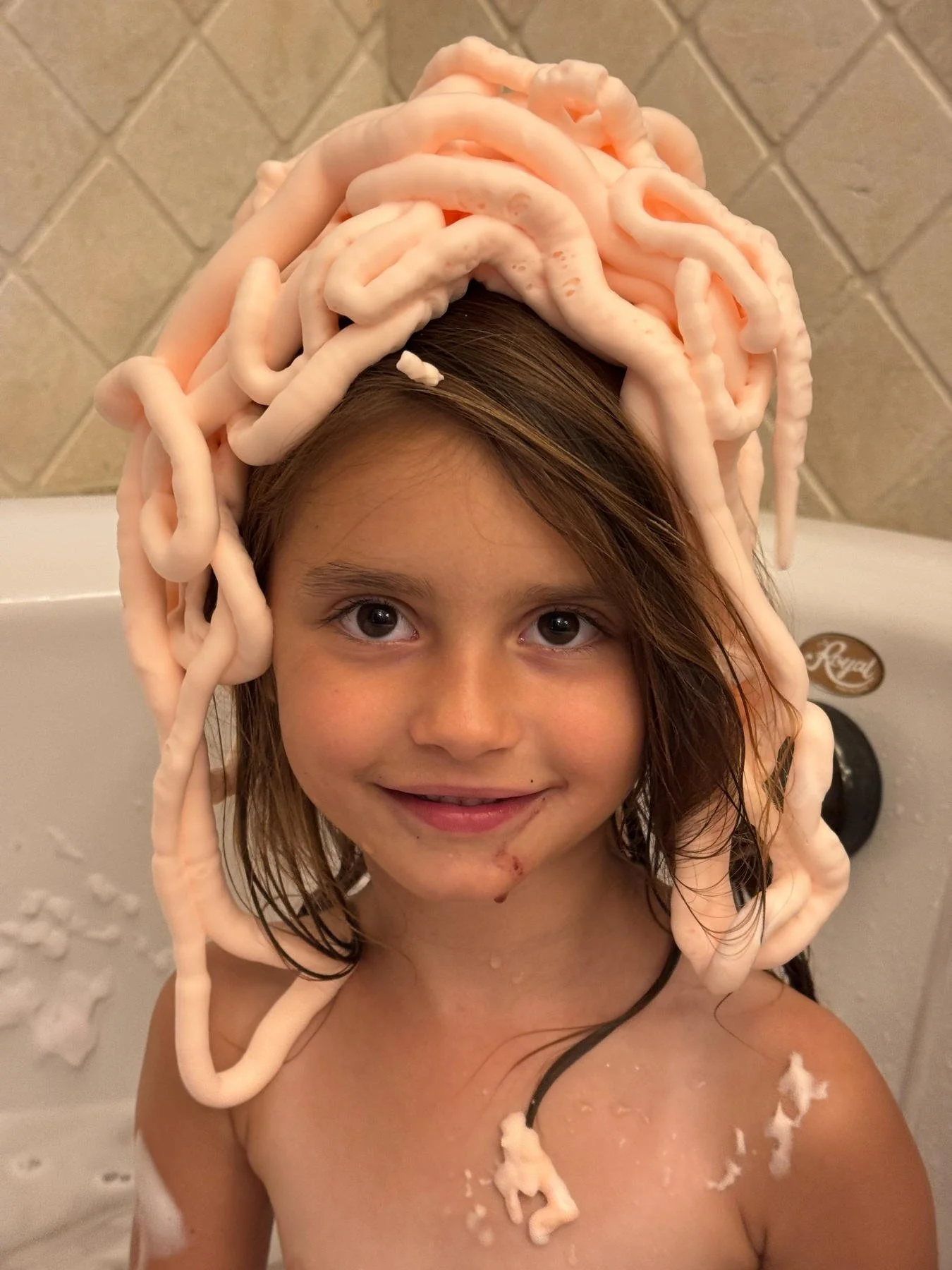
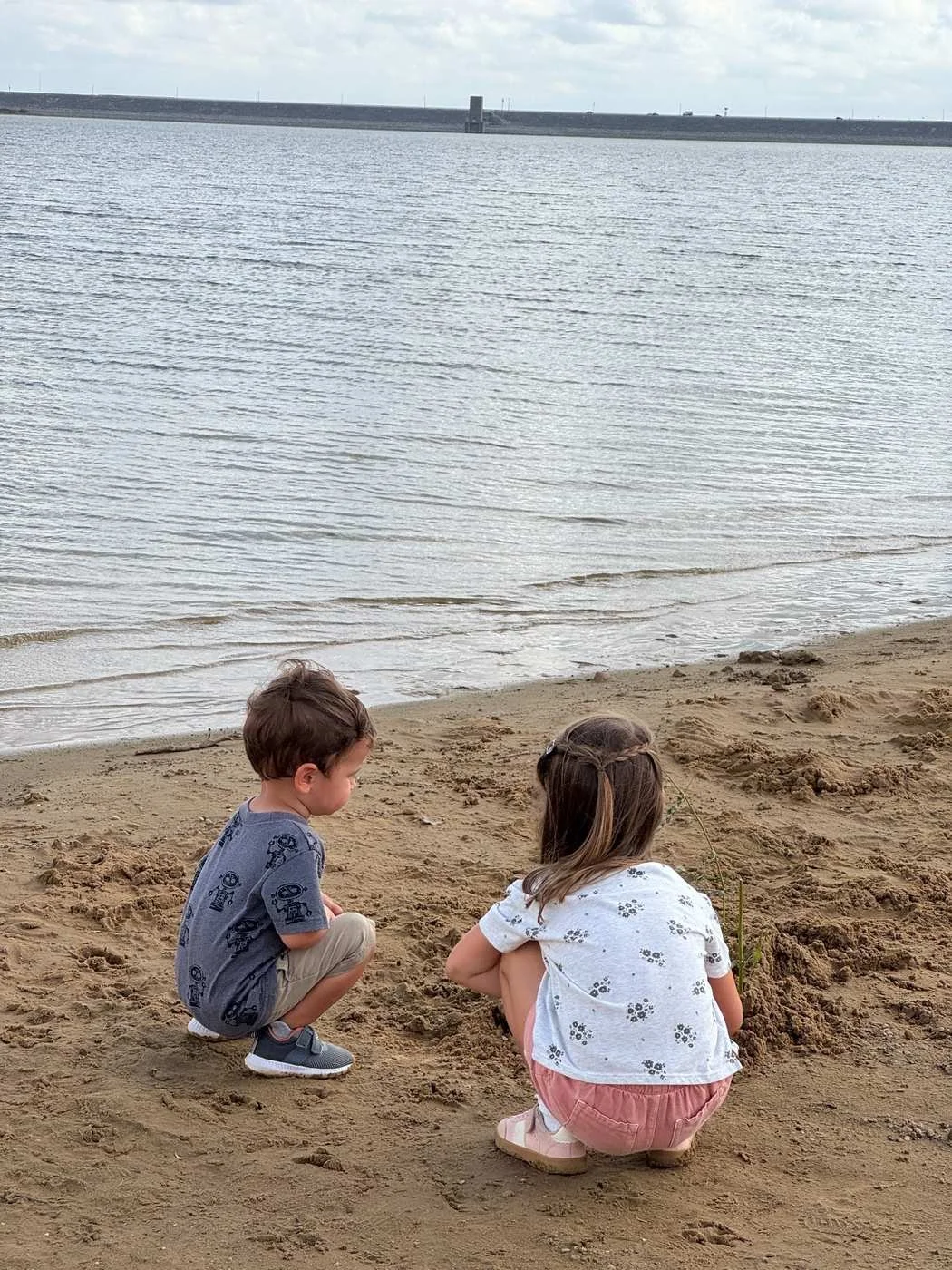
Bee had quite the week! She entertained some very special visitors, endured what felt like a full equine performance review, and may have earned herself a little more time with me.
Let's start with the best part.
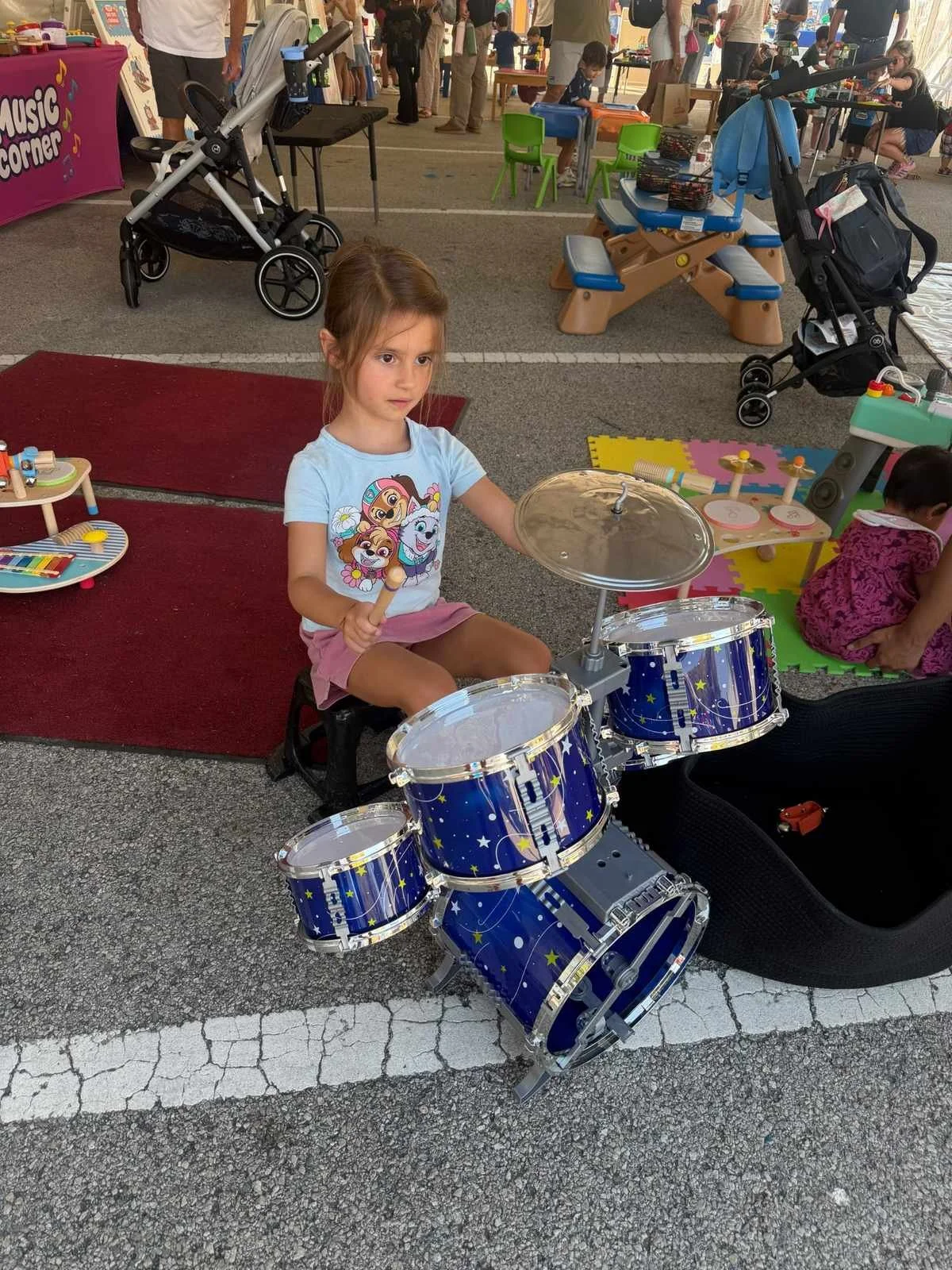
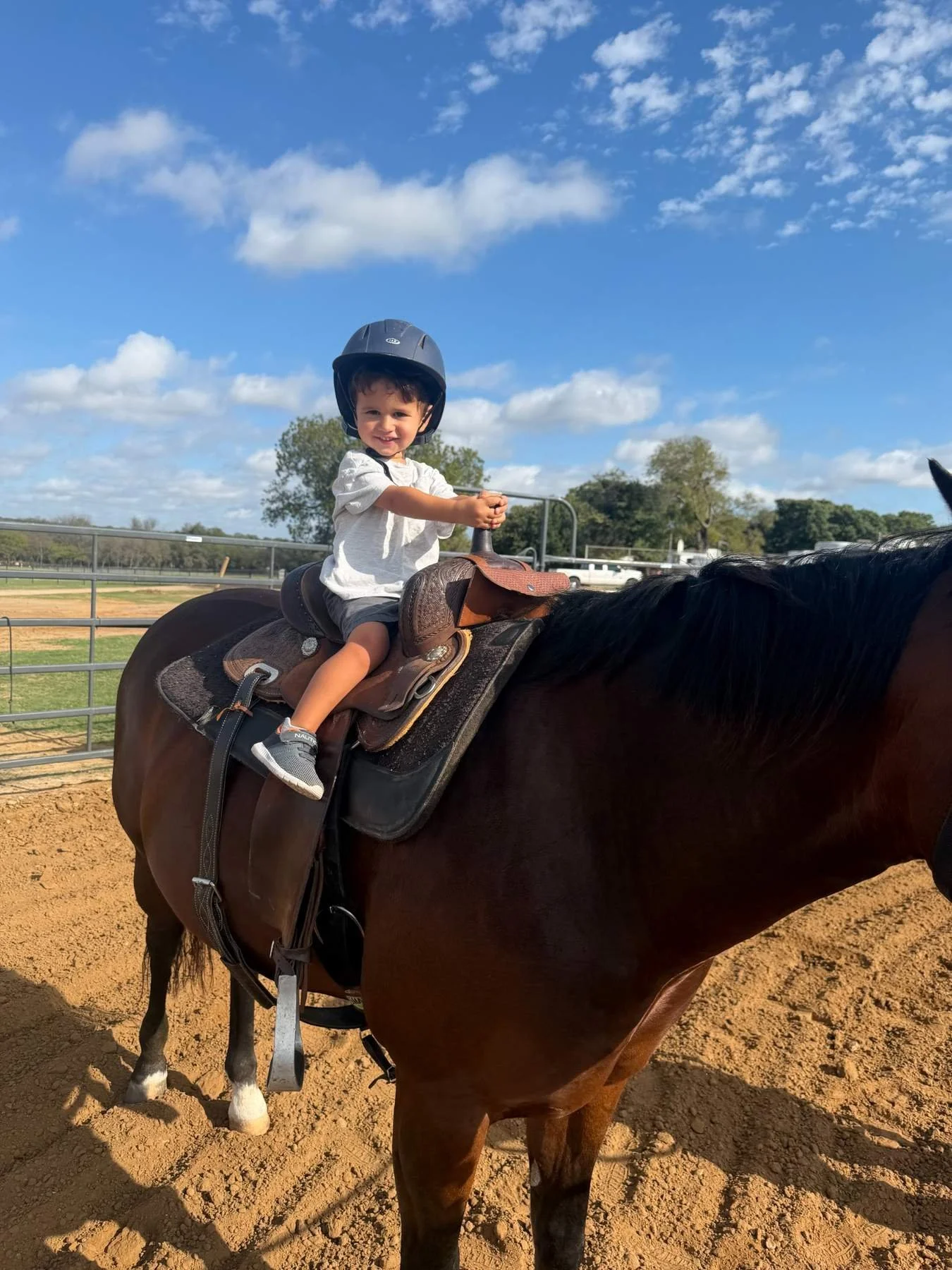
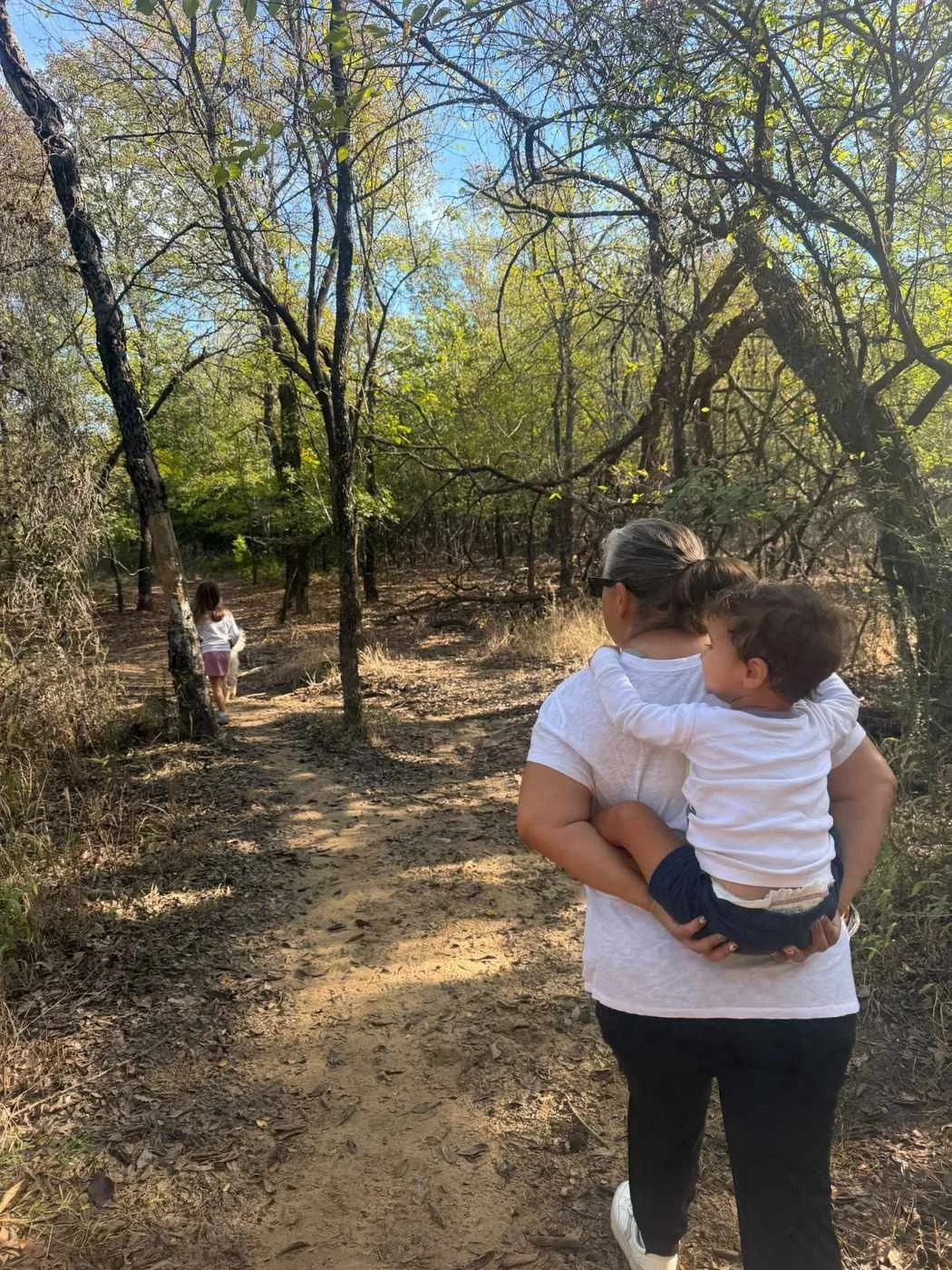
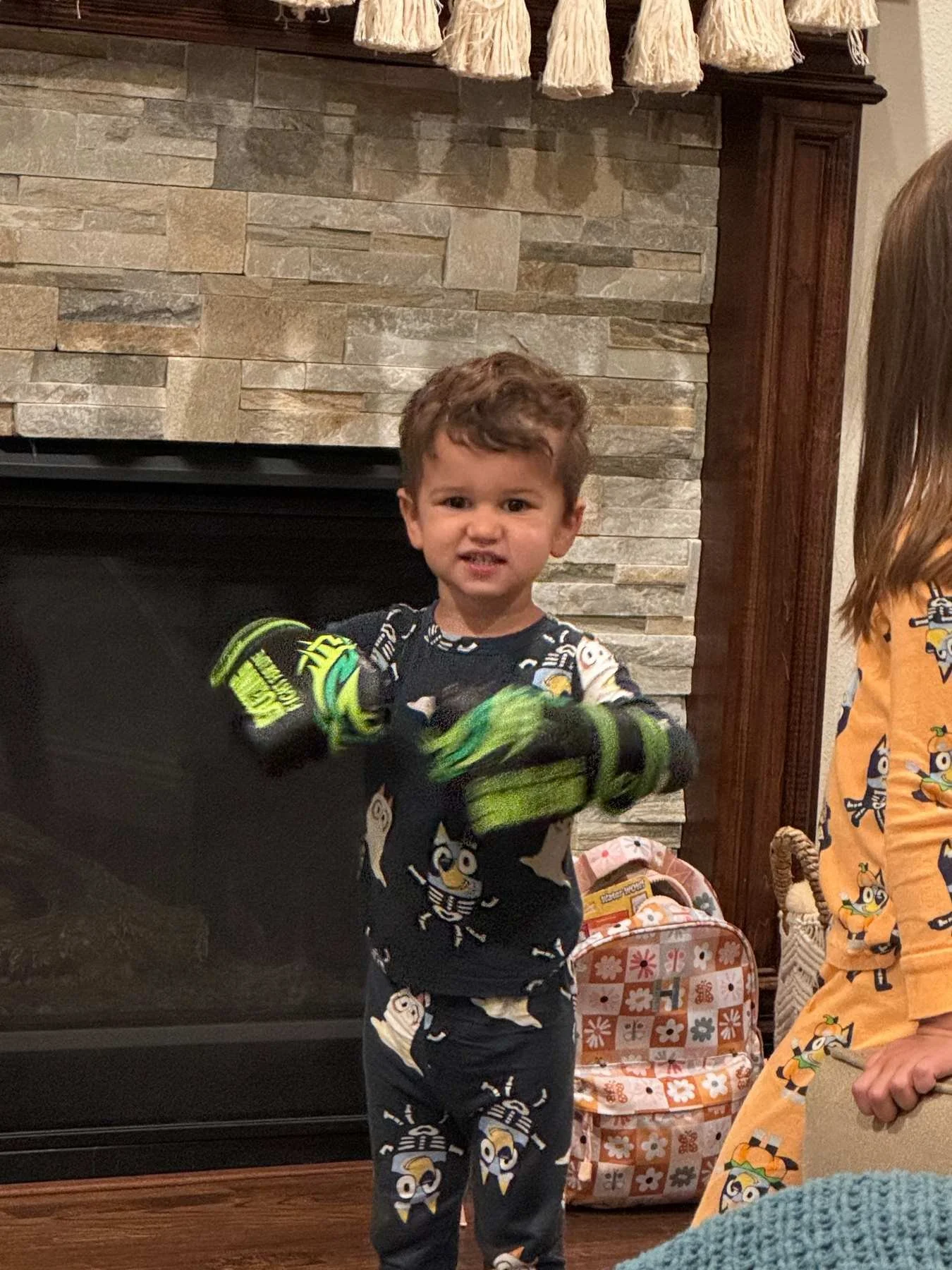
My grandchildren, Henley and Cullen, have been visiting, and naturally, a few trips to the barn was on the agenda. Both got to ride Bee, and watching those enormous smiles from the saddle absolutely warmed this Mammy's heart. There is something special about sharing a horse you love with the little people you love even more.
Of course, sometimes the most exciting thing at the barn isn't the horse at all. It's the hay. Apparently, climbing around and playing on hay can compete quite successfully with horseback riding when you're little.
And then there were the carrots.
As you know, Bee is still on her diet, so we brought a small bag of carrots as a special treat. I figured she could have one or two without derailing our weight-management efforts.
Turns out, I needn't have worried. Henley ate most of them.
Bee got a couple. Henley apparently decided the rest were for human consumption. I suppose that's one way to keep a horse on a diet!
Jenna even got in on the fun and rode Bee. Naturally, I offered her the mounting block, which is what we mere mortals use to get ourselves into the saddle without requiring a running start.
"I'll do it from the ground," she said.
As I explained how to mount, I helpfully suggested, "You can double jump if you need to."
She didn't.
One graceful move and she was up.
Ah, youth. And long legs. Two things I apparently no longer possess in sufficient quantities for mounting a horse from the ground! One I never possessed at all!
Bee's Performance Review
While I've been busy enjoying the grandchildren, Bee has been in excellent hands with the barn staff and my barn friends. I'm grateful for the people who help care for her when life pulls me in other directions.
We also had another prospective buyer come try Bee this week. This time, it was a 13-year-old girl who brought her dad and trainer along.
We spent several hours together, beginning with a very thorough examination of Bee before anyone got on her back.
The trainer ran her hands over Bee, checking for soreness or anything unusual. She felt Bee might be sore around her poll (the area just behind the ears) and hindquarters. She also studied Bee's conformation, which is essentially how a horse is built and how the different parts of her body fit together.
Then came the feet.
Why was Bee wearing shoes? Did I know she appeared to pronate, or roll inward, on her right front hoof? Were the angles of her front feet correct?
The trainer had concerns about those angles, too.
Next came the saddle. She felt it wasn't fitting Bee properly, which is something I've already known. I've been holding off on investing in another saddle while looking for my next horse, figuring I'd rather purchase one that fits the horse I'll be riding long-term.
For those unfamiliar with horses, saddle fit is more than a comfort issue. A poorly fitting saddle can create pressure points, restrict movement, and contribute to soreness. Hoof balance matters, too, because the way a horse's feet meet the ground affects how forces travel through her legs.
These are important things to evaluate, although different trainers, farriers, saddle fitters, and veterinarians may have different interpretations of what they're seeing. I take observations seriously, but I also believe in having the appropriate professionals evaluate concerns before drawing conclusions.
After all that, it was finally time to ride.
Enter the Fresh Dragon
Sarah rode Bee first to demonstrate what Bee knows.
Sarah described Bee as "fresh."
For my non-horse readers, fresh is a polite horse-world term that can mean a horse has a little extra energy, enthusiasm, or opinions about the day's activities.
With Bee, I generally translate it as "I have some suggestions, and I'd like management to hear them."
The visiting trainer also questioned why Sarah was riding Bee in a correction bit.
A correction bit is a type of leverage bit, generally with shanks and a mouthpiece designed to provide more refined signals when used appropriately. A snaffle, by comparison, works primarily through direct rein pressure without shank leverage. A hackamore communicates through pressure on the horse's nose and head rather than a conventional mouthpiece.
The trainer's philosophy was that correction bits should be used to address a specific issue, then replaced with a snaffle or hackamore once that issue is resolved.
That's certainly one approach. However, plenty of experienced riders use correction bits as part of their regular riding equipment. The important considerations include the horse's training, the bit's design, the rider's hands, and how the horse responds.
Ironically, I've only recently started learning to ride Bee in a correction bit myself, after months of Sarah helping me develop softer, quieter hands. I still ride her in a snaffle, too.
After Sarah demonstrated Bee's skills, we switched her into a snaffle and the visiting trainer rode her.
There wasn't much commentary about her performance.
Then the young girl climbed aboard.
And this is where Bee really impressed me.
The girl rode beautifully. She had quiet hands, communicated clearly, and didn't make a lot of unnecessary movements. Those are especially valuable qualities with Bee, who can become anxious when she receives too many signals at once. My only critique was that she could have loosened her reins a bit.
Bee listened. She responded. She was a very good girl.
They even rode a barrel pattern and a pole pattern together. For anyone unfamiliar, barrel racing involves navigating a cloverleaf pattern around three barrels, while pole bending requires weaving through a line of six poles.
Watching a young rider quietly guide Bee through those patterns was genuinely enjoyable. Regardless of whether a sale happens, it was nice to see Bee respond so well.
Maybe Spring Is Better
We haven't heard back from the family, and that's okay.
At this point, I'm leaning toward taking Bee off the market for a while and revisiting the idea of selling her in the spring.
Finding the right person for Bee has always mattered more to me than simply finding someone willing to buy her. She has a lot of ability, a big personality, and plenty of opinions. She deserves a rider who appreciates all three.
And maybe I'm ready for a break from the selling process, too.
The weather is finally supposed to cool off here in North Texas, which means I can look forward to some more comfortable rides without feeling like we're both melting before we finish warming up.
So for now, I'm looking forward to spending more time riding my little fresh dragon, continuing what Sarah and I have been working on, and enjoying Bee for the horse she is.
This week reminded me that Bee is more than the horse I'm trying to find a new home for. She's the horse who carried my grandchildren around with enormous smiles, tolerated a carrot shortage, gave Jenna a chance to demonstrate the advantages of youth, and showed a young rider what she can do with quiet hands.
Those are pretty good accomplishments for one week.
And if Bee could write her own performance review?
I'm fairly certain it would read:
"Excellent with children. Highly skilled. Management continues to restrict snacks. Would appreciate fewer evaluations and more carrots."
I think that's fair, Bee.
I think that's fair.