
March 27, 2026: Improving My Seat and Letting Go
In case you missed it, Bee and I made it out to the back forty this week with a group of gals. It felt like a milestone worth celebrating. While I was confident she could handle it and would not take off with me, I did give her a mild sedative to take just a little of the spice out of the situation for everyone’s safety. Horses read energy. Groups change dynamics. I wanted the experience to be positive and uneventful for all of us.
She did great.
We naturally settled into our usual trail riding role, bringing up the rear. There is something about that position that suits us. Less pressure, more space, and time to think through decisions instead of reacting to the energy of the herd.
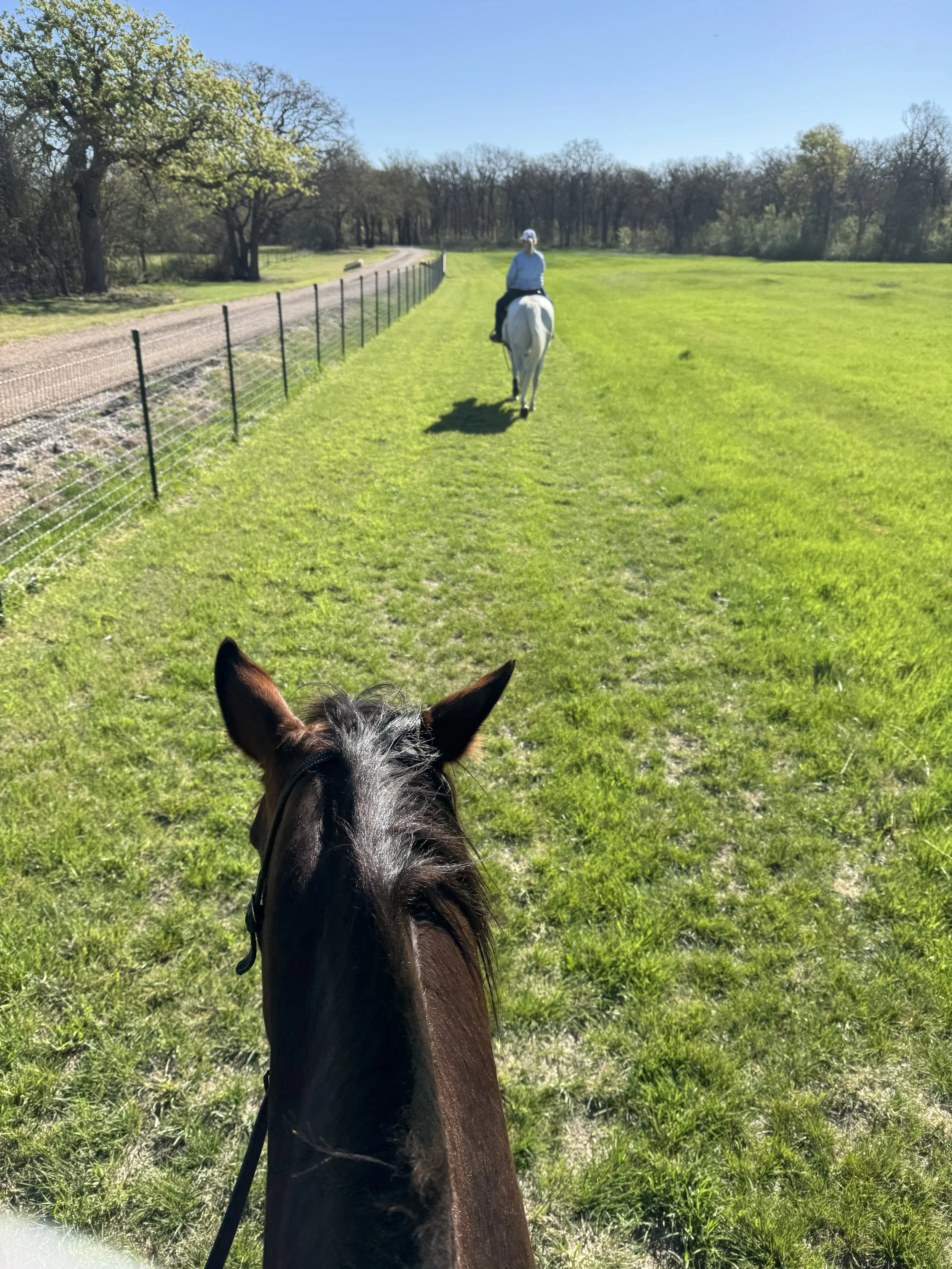
First Ride Back. Quiet Confidence.
We peeled off one hay field lap early and spent some time working on the dreaded “lane.” For those who have followed along, you know this has been one of Bee’s least favorite assignments. She briefly forgot her training, but split reins proved their usefulness. A light tap on her hindquarters and she moved forward all the way down the lane, then back, without further debate. We finished the ride by dismounting near the mare pasture, which removed any temptation to rush back to the barn.
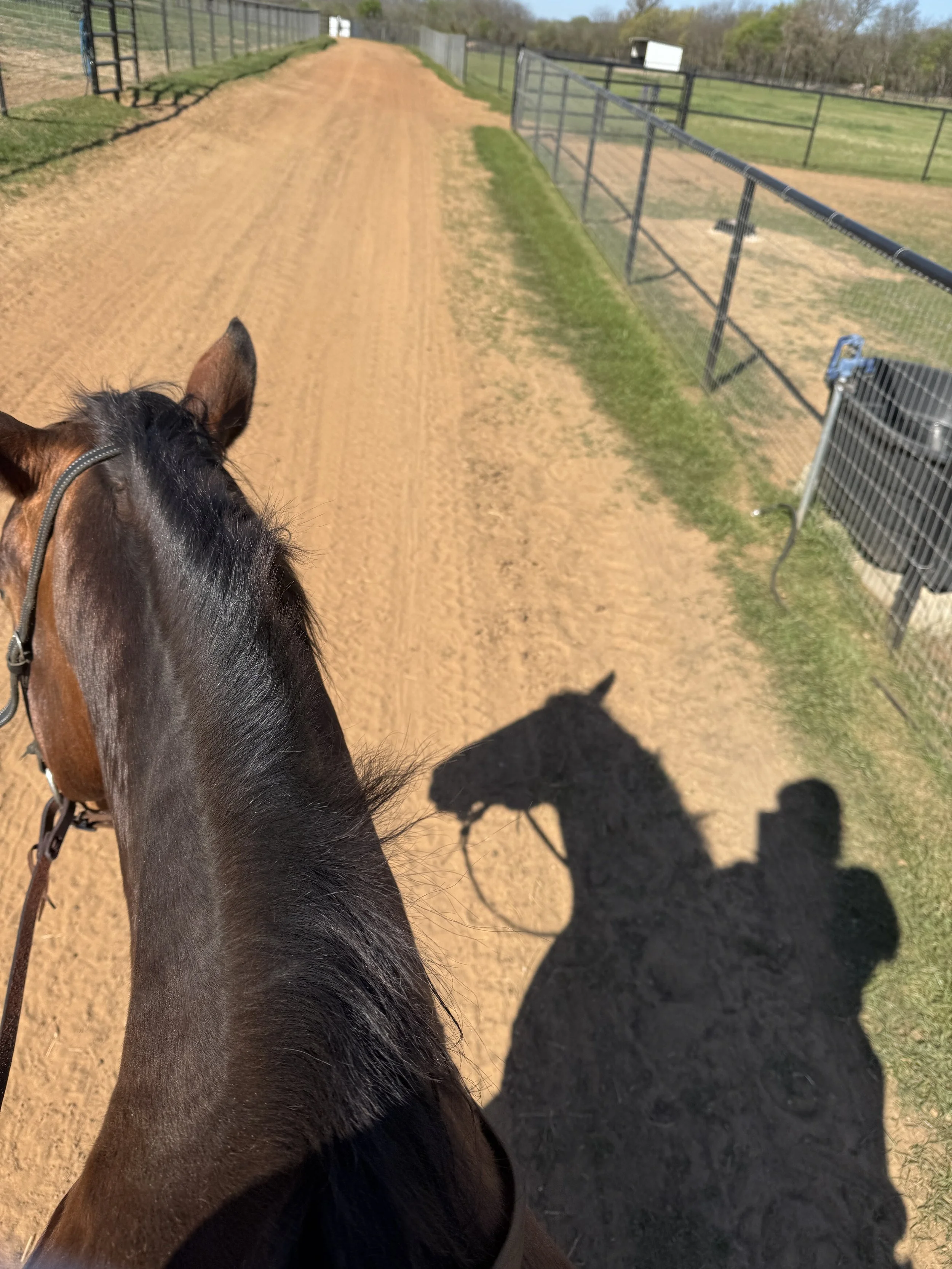
Facing It Together. Our Shadow. Our Courage.
All things considered, she was thoughtful, responsive, and willing. That counts for a lot.
This week also marked another big step. Bee headed to trainer Sarah Salter’s earlier than originally planned. Instead of April first, she left yesterday. I know she is in capable and caring hands. I trust Sarah and her family completely. Still, sending your horse somewhere new comes with emotions you cannot always logic your way through.
I find myself worrying about things that probably sound familiar to any parent. Will she miss her friends? Will we have to go through the reintroduction process all over again when she comes home? Will she decide she prefers Sarah to me? Will she struggle to learn what we need her to know, even though I am convinced she is incredibly smart? That is what all moms say, right?
I am also incredibly grateful to Sarah for her patience as I have fired off what can only be described as a steady barrage of questions. Do you need my tack? I am leaving supplements for her. How do I pay you? She needs her shot on Wednesdays. Can we set up a schedule for me to ride?
The list seems endless when you care deeply about the details. Sarah has answered every message with kindness and reassurance, reminding me that this process is as much about building my confidence as it is about developing Bee’s skills.
A Little Goodbye. A Big Step Forward. So Grateful for the Care Bee’s Surrounded By. I’m not crying, it’s allergy season.
Bee: Don’t worry friends, I’m saving the sass for later!
Trust and growth often travel together. If we want improvement, we have to allow space for it to happen. I will be heading out to ride with Sarah several times a week beginning next week. This is not just Bee’s training journey. It is mine too.
Which brings me to the concept of improving your seat.
In simple terms, your seat is how you sit, balance, and communicate with your horse through your body. It influences everything from rhythm and direction to safety and confidence. A strong, independent seat allows your hands to be softer, your cues to be clearer, and your reactions to be calmer. It matters whether you ride English or Western. The disciplines look different, but the foundation is the same. Stability, timing, and feel.
Improving your seat also means developing independence in your body. Ideally, your legs, hands, and upper body are not bracing against each other for balance. Your weight should flow down through your hips into your heels, allowing you to move with the horse rather than against them. When your seat is secure, sudden changes in speed, direction, or terrain feel less dramatic because your center of gravity stays organized. This is especially important on the trail, where footing, wildlife, and group dynamics can change quickly. A balanced seat helps you stay relaxed, which in turn helps your horse stay relaxed. Horses are remarkably sensitive to tension. The more stable and intentional we become in the saddle, the clearer and quieter our communication becomes.
Improving your seat is not glamorous work. It is repetition, awareness, and often a little humility. It means realizing that sometimes the biggest change needed is not in the horse, but in the rider.
For now, Bee is learning. I am learning. And we are both adjusting to a temporary change in routine.
This weekend, we will be trading boots and reins for birthday candles and balloons as we head to Nashville to celebrate two very important little humans turning two and four. Life has a way of reminding us that growth comes in many forms, whether it is measured in saddle time or cake slices.
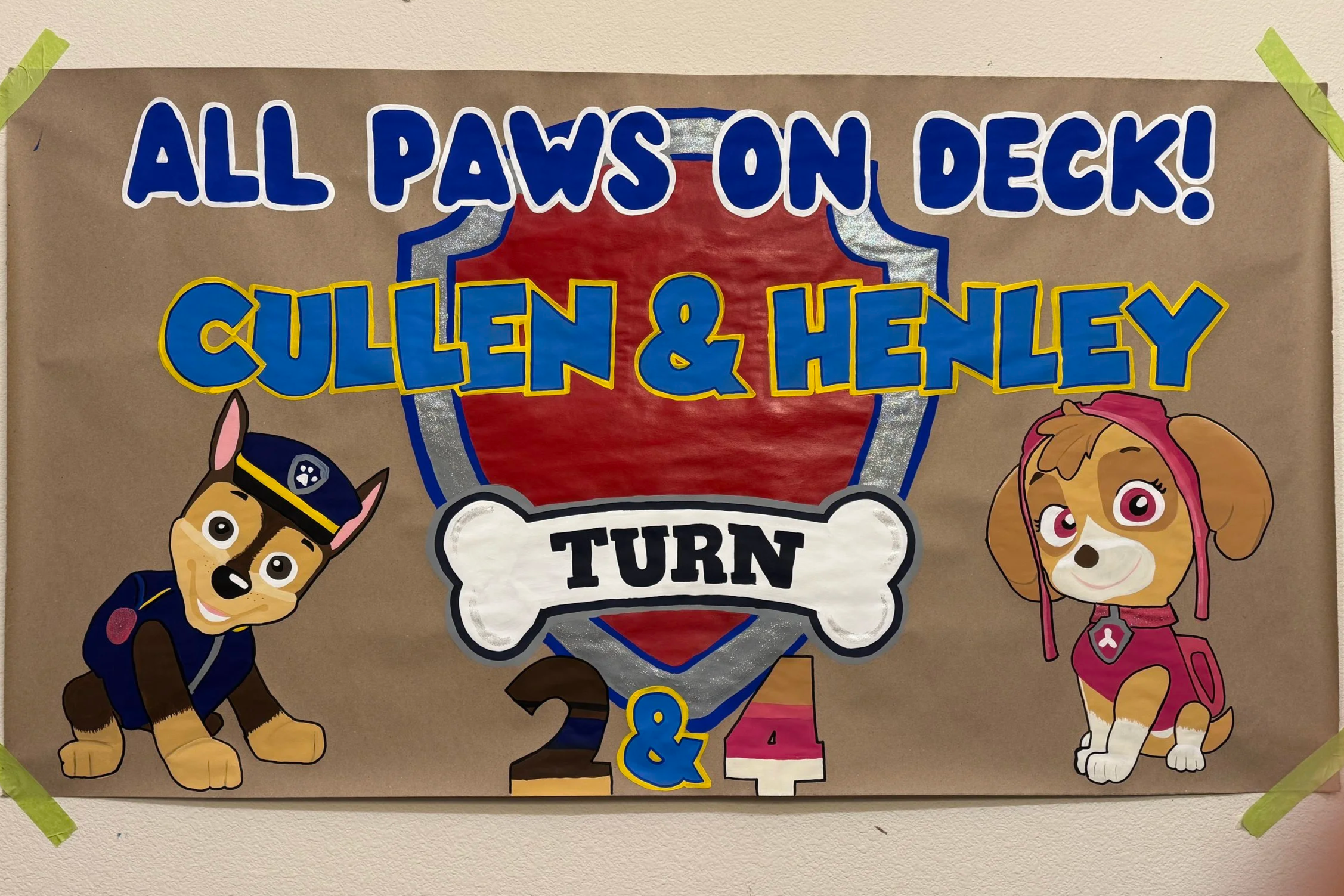
No Job Too Big for Mammy!
Until next time,
Christina & Bee 🐝💛