
HUZZAH!
While I've been busy trying to find a saddle that fits both Bee and me, we've also been working on something else: opening and closing the arena gate while I'm on her back.
Sounds simple enough, right?
Not with Bee.
Historically, the second I crack that gate open, Bee decides we're finished and attempts to make her grand exit. Apparently, an open gate is an invitation, not a request.
We've been practicing moving her shoulders independently of her hindquarters, stopping after each movement, and waiting for my next cue. The idea is to teach her that listening and standing quietly are what eventually get me off her back, not rushing through the gate.
Last week, we tried practicing the day after our lesson. Unfortunately, the wind kept blowing the gate open, Bee got impatient, and then I got impatient with Bee.
It was an epic fail.
Fast-forward to Saturday.
We'd finished riding around the arena, and I thought, What the heck? Let's just see what happens today.
We approached the gate and stopped.
I asked Bee to take one step forward so I could reach the latch.
One step. Stop.
Perfect.
I unlatched the gate and swung it open, fully expecting Bee to take matters into her own hooves.
She didn't move.
She just stood there, waiting.
Well, would you look at that!
I asked her to back up two steps.
Stop.
Move her shoulders to the right.
Stop.
Walk forward until we reached the end of the gate.
Stop.
Move her hindquarters to the left so we could reposition ourselves alongside the gate.
Stop.
Now, this is usually where Bee decides she's had enough, throws her head up, and attempts to leave.
Not Saturday.
She waited.
Two steps forward.
Stop.
I reached for the gate and pushed it toward the fence.
Bee stood quietly.
Then I asked her to move her hindquarters toward the gate.
Stop.
Move her shoulders toward the gate.
Stop.
Finally, I asked her to move her whole body sideways so I could reach the gate and close it. This movement is called sidepassing, where a horse moves laterally rather than forward or backward.
Stop.
Gate closed.
"HUZZAH!"
I shouted it across the property!
I immediately hopped off Bee, rubbed her neck, loosened her saddle, and praised her like she'd just won another world championship.
Because, in my mind, she had!
She'd performed every movement with patience and precision, waiting for each cue as though she'd been doing this her entire life.
I couldn't believe it.
Naturally, I had to tell everyone.
Connie heard about it. Donna heard about it. Sarah heard about it. Pretty much anyone at the barn who made eye contact with me heard about it.
Then I came home and told my husband.
And later, at dinner, I told my daughter.
And now I'm telling all of you!
Here's the thing about working with horses, especially one with as much personality as Bee.
There are days when you wonder whether anything you're teaching them is sinking in. Days when you're frustrated, they're frustrated, and you question whether you're making progress at all.
And then something like Saturday happens.
No rushing. No head tossing. No arguments. Just a horse listening to her rider, one small request at a time.
It might not sound like a monumental accomplishment to someone who's never worked through these challenges with a horse.
But to me?
It made my whole day. Heck, it made my whole month!
And I suspect that's what keeps so many of us coming back to the barn, even after the difficult days.
Sometimes progress isn't measured in miles ridden or ribbons won.
Sometimes it's measured in one quiet step, followed by a stop.
And sometimes, if you're really lucky, it's an entire gate opened and closed without a single argument.
HUZZAH, Bee! You magnificent little dragon. ❤️🐝
The Saddle Search
If you've been following along with Bee's adventures, you know we've been working hard on our riding. Between lessons, groundwork, and the occasional dramatic interpretation of an ordinary barn activity, we're making progress!
But lately, I've been wondering whether my saddle might be working against me.
I've been riding in a 14-inch barrel saddle, and I really need something closer to a 16-inch seat. I've also noticed that my legs tend to drift behind me, which tips my upper body forward.
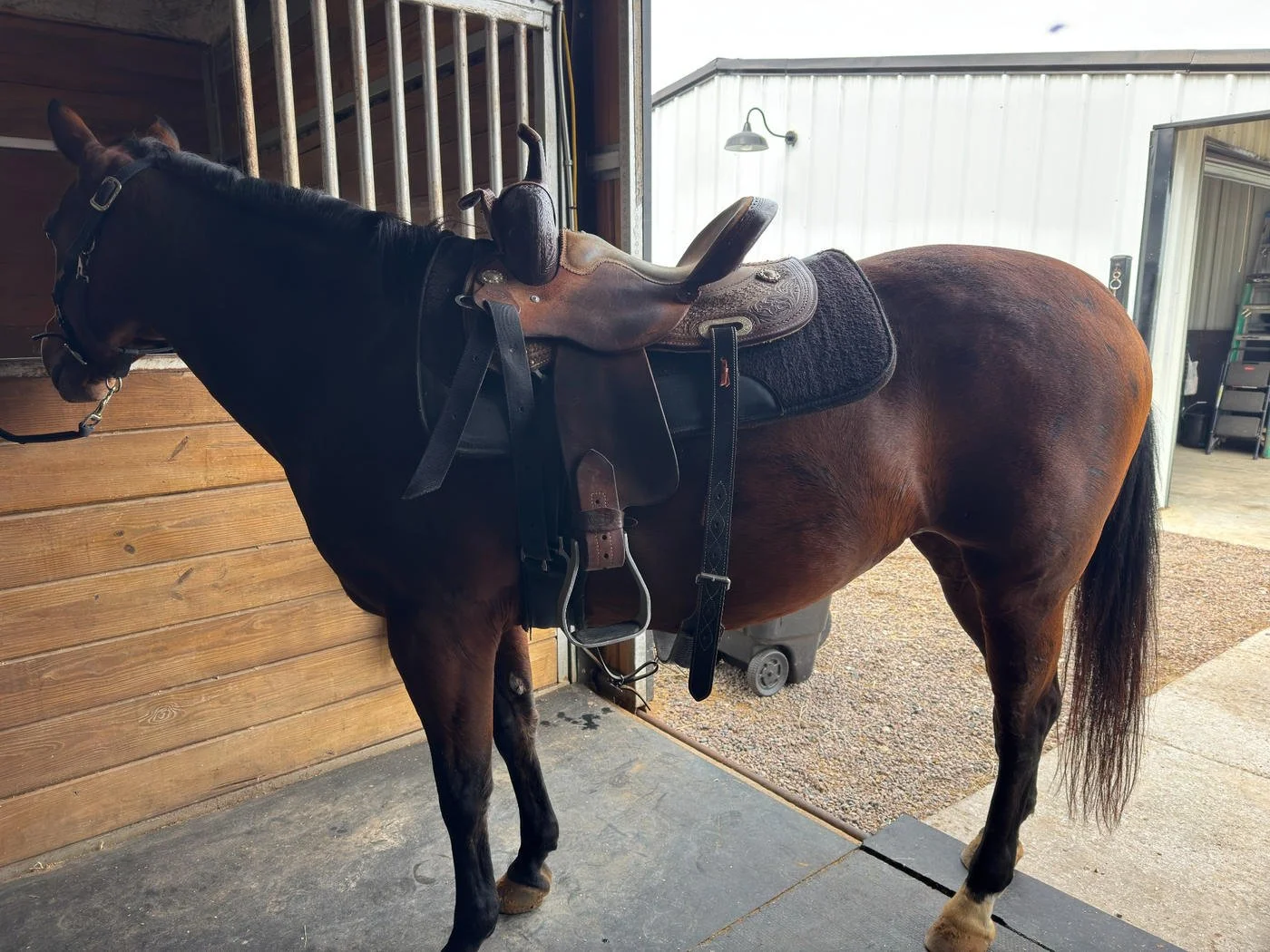
Notice the height of the seat and horn.
That's not exactly the balanced riding position I'm trying to achieve.
So, I've officially entered the world of Western saddle shopping.
And apparently, choosing a saddle is a little like shopping for jeans. Just because two are labeled the same size doesn't mean they'll fit the same way. Except jeans don't weigh 30+ pounds, cost thousands of dollars, or have to fit a second opinionated individual.
Welcome to our latest adventure!
Not All Western Saddles Are Created Equal
Before I started shopping, I knew there were different types of Western saddles. What I hadn't appreciated was just how much their designs vary depending on the job they're intended to do.
Here's what I've been learning.
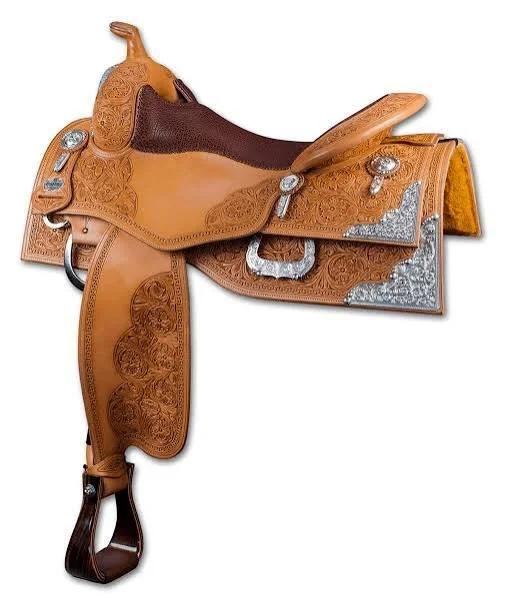
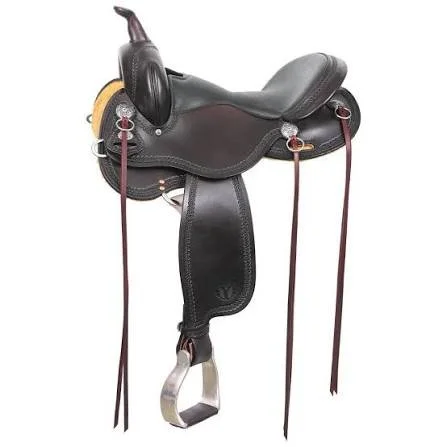
Barrel Racing Saddles
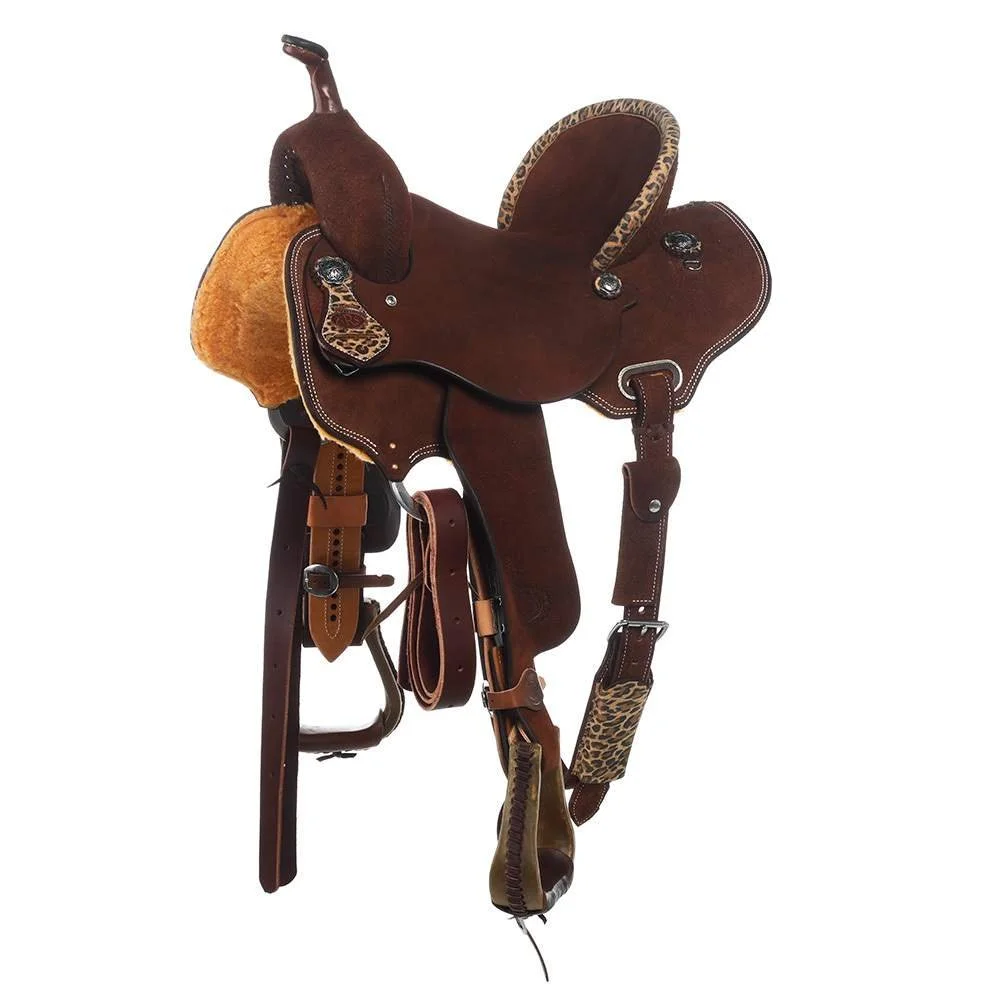
Barrel saddles are designed for speed, tight turns, and quick changes of direction. I bought my first saddle thinking this is what I’d be doing with Bee.
They typically have a deep seat, a high cantle (the raised back of the saddle), and relatively short, rounded skirts. Many are also lighter than other Western saddles.
My current saddle is a barrel saddle, and I've always appreciated how secure it feels.
Unfortunately, a deep seat doesn't automatically mean a saddle fits the rider correctly.
In my case, the seat is too small, and I think it's contributing to my riding position problems.
Cutting Saddles
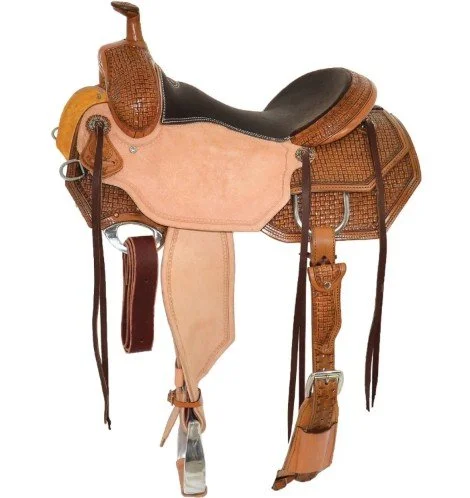
Cutting saddles are designed for working cattle, specifically when a horse must make quick, unpredictable movements to keep a cow separated from the herd.
They typically feature a supportive seat, a tall horn, and a higher pommel, which is the raised structure at the front of the saddle.
These features help the rider stay balanced while the horse makes rapid side-to-side movements.
Since I'm looking for a saddle that helps me sit deeply and feel secure, cutting saddles have caught my attention.
The downside? Traditional cutting saddles can be super heavy.
And while I love Bee, I'm not particularly interested in turning saddling her into my daily weightlifting program.
Ranch Cutting Saddles
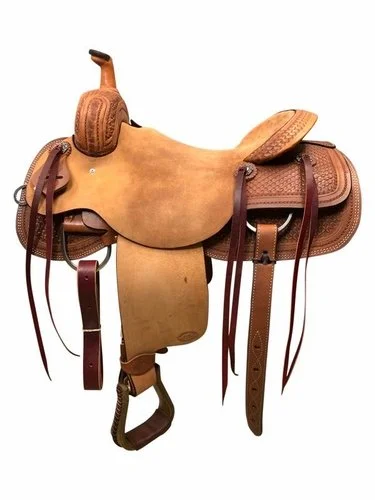
Ranch cutters combine elements of cutting saddles with features suited to everyday ranch work.
They're often designed to be versatile enough for cattle work, arena riding, and general ranch activities.
Many have a somewhat flatter seat than a traditional cutting saddle, although that varies by manufacturer.
For someone like me who enjoys general Western riding and working on horsemanship, a ranch cutter could be worth considering.
The question is whether it would provide the deep, secure pocket I'm looking for.
Reining Saddles
Reining saddles are designed to allow close communication between horse and rider during maneuvers such as spins, sliding stops, and lead changes.
They commonly feature a lower horn, close-contact construction, and a seat that allows the rider's hips and legs to move freely.
Some riders love that freedom of movement. Others prefer a saddle that offers more of a secure pocket.
Since my current challenge is keeping my legs underneath me and my upper body upright, I'll be paying close attention to how a reining saddle positions me.
Trail and All-Around Saddles
Trail and all-around saddles are designed with comfort and versatility in mind.
Depending on the model, they may offer padded seats, supportive cantles, lighter construction, and features for carrying trail equipment.
These can be excellent choices for recreational riding, but their designs vary enormously.
A trail saddle with a deep, supportive seat might actually be a better fit for me than a performance saddle with a flatter seat.
The Great Saddle Try-On
Fortunately, I have some generous barn friends who have offered to let me try their saddles. And thank goodness, because saddle shopping is turning out to be quite the adventure!
Bee has low withers and broad shoulders, and finding a saddle that accommodates her shape hasn't been easy. Several we've tried have been too tight.
So far, the clear winner has been Connie's Teskey's Pro Cutter.
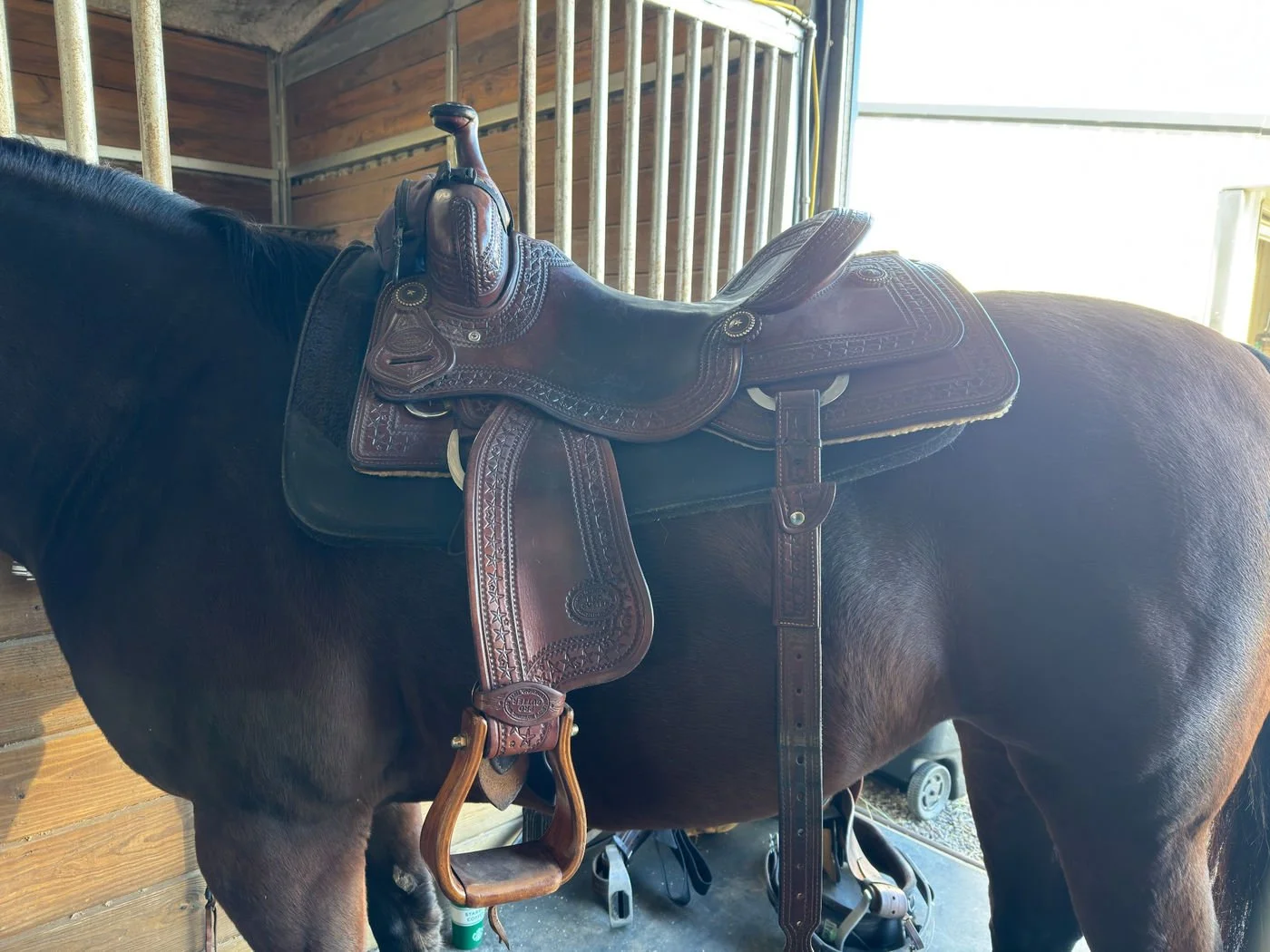
Connie’s Pro Cutter. Ignore the fact that the saddle pad is too small for the saddle.
I've ridden Bee in it twice, and it fits both of us well! I like the way I sit in it, and I think it's actually improved my riding position compared with my barrel saddle.
My legs seem to stay underneath me more naturally, and I feel more balanced.
There's just one problem.
It weighs approximately one metric ton.
Okay, perhaps that's a slight exaggeration. But I'm not getting any younger, and lifting a heavy saddle onto Bee's back isn't something I want to struggle with every time I ride.
Betheny also has a Teskey's Pro Cutter, and hers is noticeably lighter because it doesn’t have the second skirt that Connie’s has. Naturally, I was excited to try it.
Unfortunately, the fit was a little tight on Bee, although not nearly as tight as some of the others we've tried. The stirrups were also just a bit too long for me to get a good feel for the saddle.
That has been a recurring problem with several of the saddles we've tested. If the stirrups aren't adjusted to my leg length, I can't properly evaluate my position or how secure I feel in the seat.
So, for now, Connie's saddle remains the one to beat.
We've found a saddle that fits the horse and the rider. Now we just need to find one that doesn't require a gym membership to lift.
Surely that's not asking too much?
Two Bodies, One Saddle
One of the biggest lessons from this process is that saddle fit is really two separate questions.
Does it fit the horse?
A saddle needs to distribute weight appropriately across the horse's back without creating excessive pressure, restricting shoulder movement, or making contact with the spine or withers.
Bee's broad shoulders and lower withers make the shape of the saddle tree especially important.
The tree is the internal framework that gives a saddle its shape and helps distribute the rider's weight.
A saddle that looks good sitting on a horse's back doesn't necessarily fit correctly once a rider is aboard.
Does it fit the rider?
Seat size is only part of the equation.
The shape of the seat, the position of the stirrups, the height and angle of the cantle, and the overall balance of the saddle all influence how a rider sits.
My current barrel saddle is a 14-inch seat, and I need something closer to a 16-inch seat. I've noticed that my legs tend to drift behind me, tipping my upper body forward.
I'm hoping a different saddle will help me maintain a more balanced position with my shoulders, hips, and heels aligned.
And after riding in Connie's Pro Cutter twice, I'm beginning to think the right saddle really can make a difference.
Of course, I still have to do my part. Apparently, you can't purchase good riding position entirely through saddle shopping.
Wouldn't that be convenient?
What I'm Looking For
My wish list is becoming clearer.
I want a deep, supportive seat that helps me feel secure without locking me into an awkward position.
I want my legs to hang naturally underneath my hips instead of drifting backward.
I want a saddle light enough that I can comfortably lift it onto Bee's back.
And most importantly, I want a saddle that fits Bee correctly and allows her to move freely.
Connie's Teskey's Pro Cutter has shown me that the combination of a comfortable horse and a more balanced rider is possible.
Now I just need to find a lighter version of that experience.
The Search Continues
At this point, cutting saddles are looking promising, particularly the Teskey's Pro Cutter.
But I haven't found the perfect combination yet.
Connie's saddle fits Bee and me well, but it's heavier than I'd like. Betheny's is lighter, but I can not adjust the stirrups up any higher and need a closer look at Bee's fit.
I'm learning not to rule out a saddle simply because the stirrups weren't adjusted for me, but also not to mistake a promising first impression for a proper fit.
The search continues for a deep, secure seat, a balanced riding position, a manageable weight, and, most importantly, a saddle that keeps Bee comfortable.
Bee, naturally, has not expressed an opinion about saddle styles.
But I'm confident she'll let me know what she thinks once we start trying more of them.
The search continues for a saddle that fits Bee, fits me, and doesn't require a forklift. Two out of three isn't bad, but I'm holding out for all three!
Until next week, happy trails from Bee and me!