
July 10, 2026: Summer in Texas = Sweat, Skin & Bee's New War Paint
One thing nobody tells you before you buy your first horse is just how much time you'll spend staring at their skin.
Seriously.
You'll become obsessed with every tiny bump, missing hair, fly bite, scab, or patch that looks just a little different than it did yesterday.
One day you're riding through a beautiful hay field feeling like you've stepped into a western movie. The next day you're standing in the cross ties examining a quarter-inch bald spot like you're preparing a presentation for veterinary school.
Welcome to horse ownership.
Summer in Texas is particularly challenging because heat, humidity, flies, sweat, dust, and sunshine all seem determined to gang up on our horses at the same time. While Bee has had a really good summer overall, she reminded me this week that even happy, healthy horses can develop skin problems.
Fortunately, we've learned a few things since last year.
Last Summer's Battle: Summer Sores
Last summer, Bee developed summer sores around her lip.
If you've never seen one, consider yourself lucky until now.
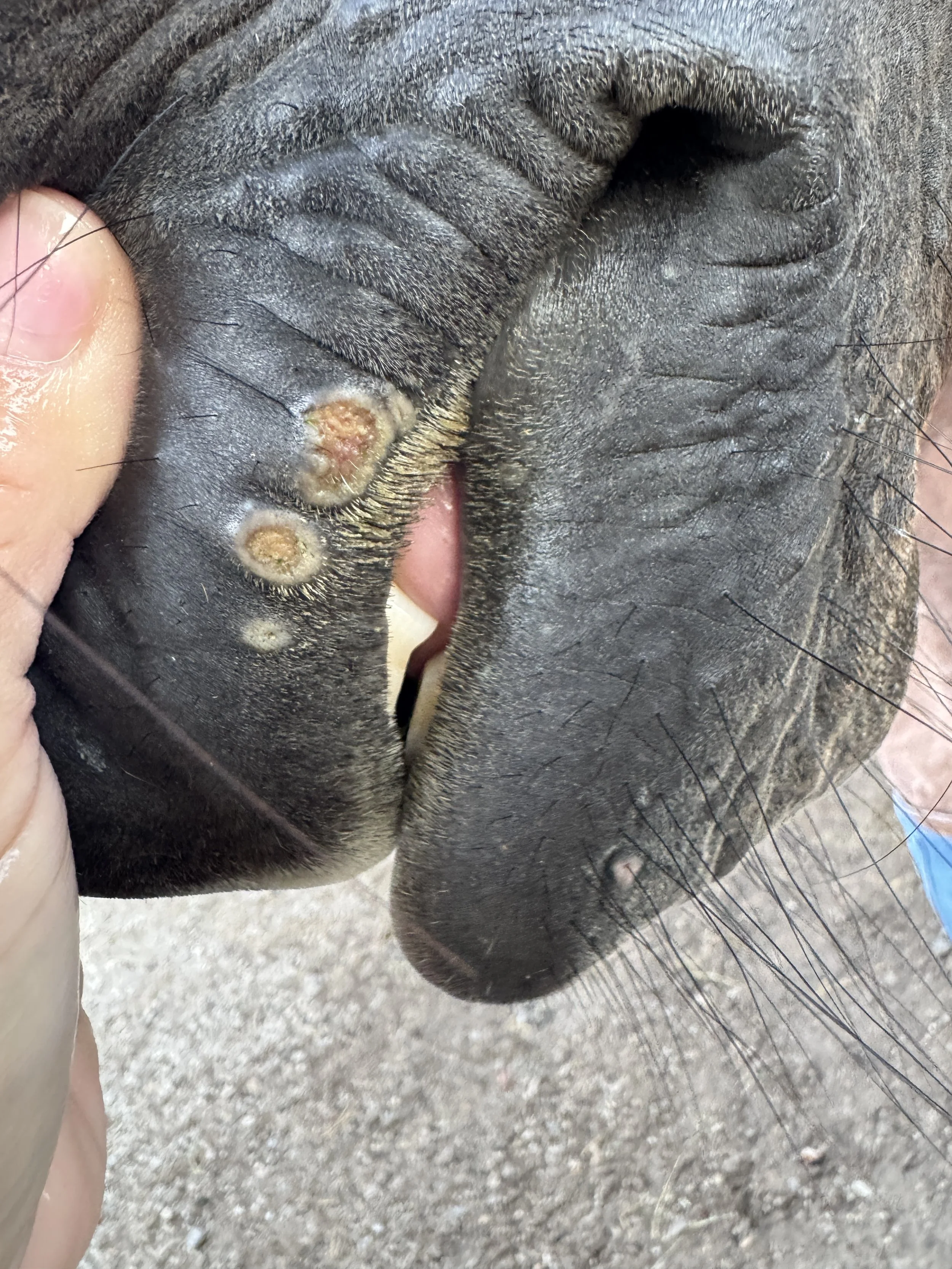
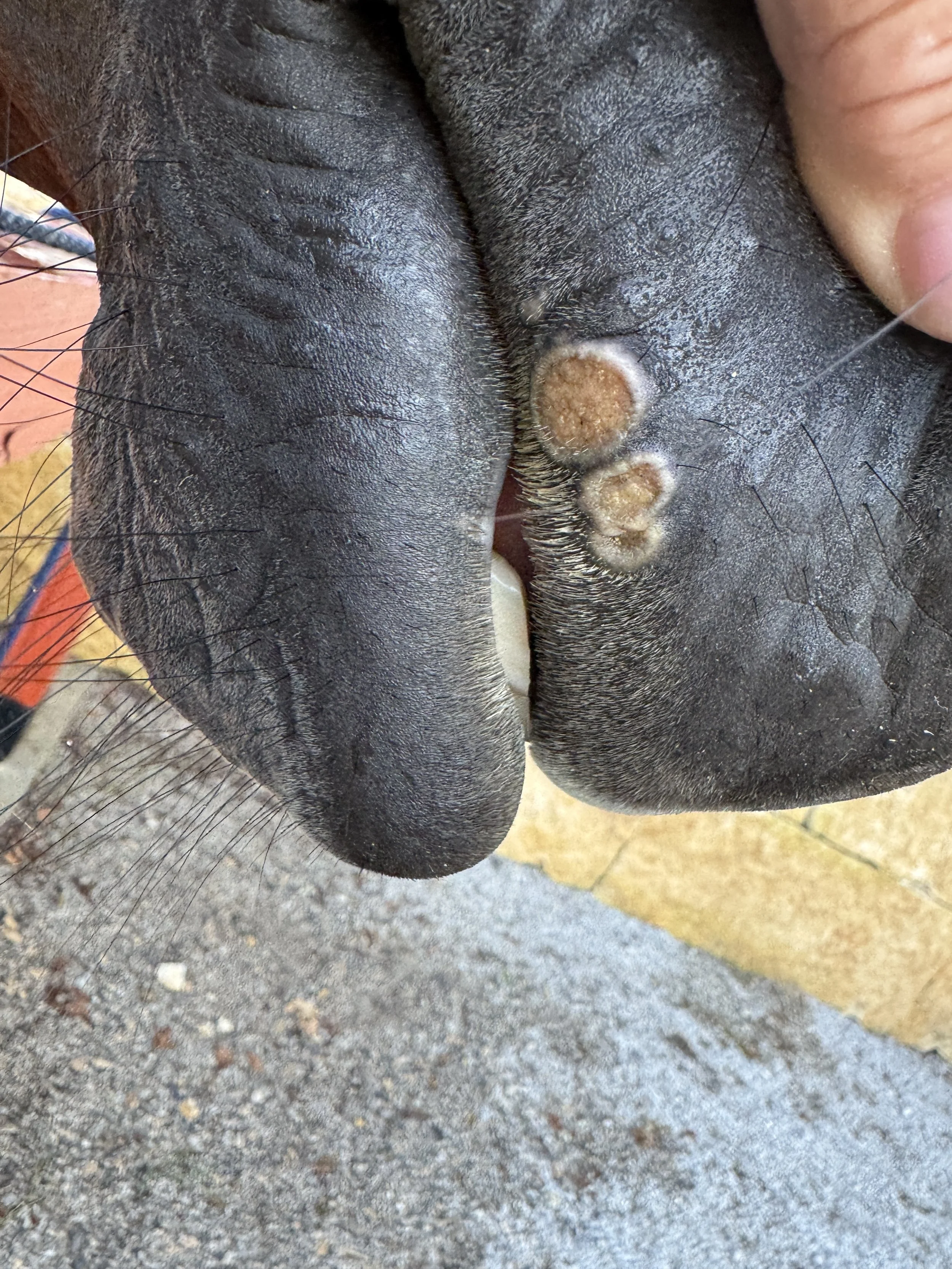
Summer sores aren't your typical scrape or insect bite. They often become raised, irritated, slow to heal, and can look far worse than you'd expect from such a small area.
The culprit isn't actually the sore itself.
It's a tiny parasite.
Certain stomach worms, called Habronema, normally live harmlessly inside many horses. The worms themselves aren't usually the problem. The trouble begins when flies land in manure, pick up the microscopic larvae, and then deposit those larvae onto moist areas of a horse's body like the lips, eyes, nostrils, or even a small cut.
Instead of completing their normal life cycle, the larvae burrow into the skin. The horse's immune system reacts aggressively, creating the inflamed tissue we know as a summer sore.
The good news?
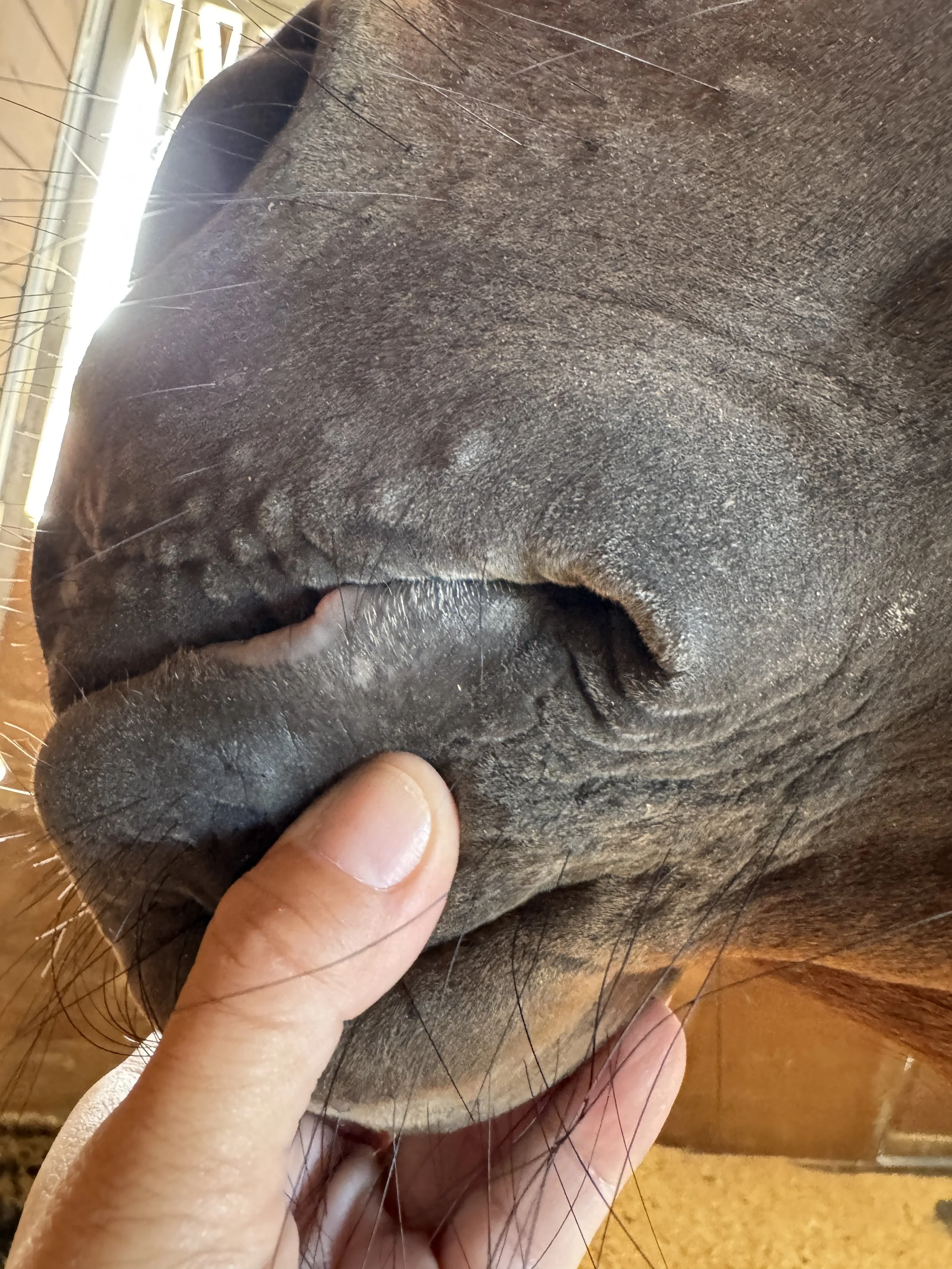
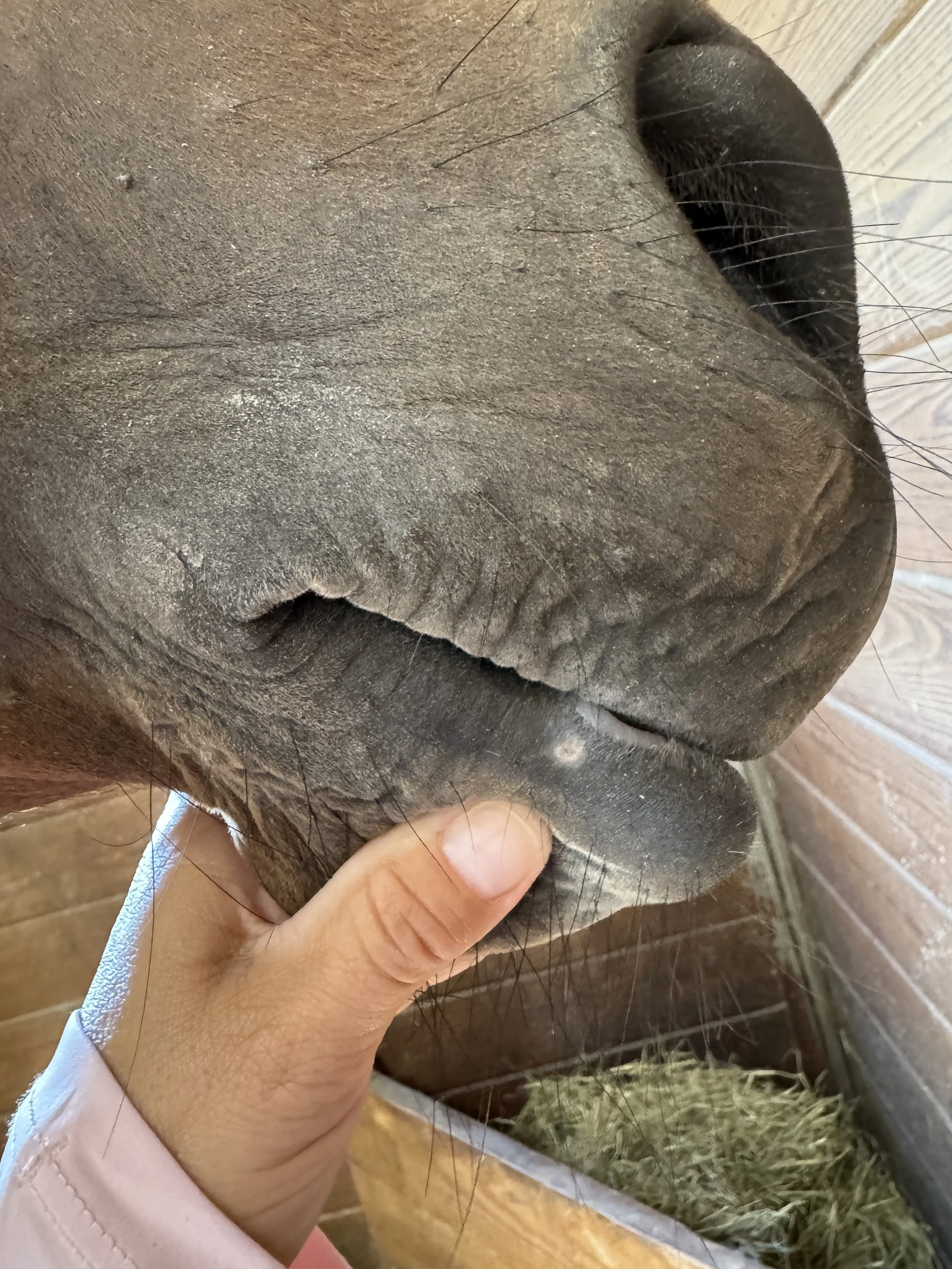
This year I caught the tiniest bump beginning on Bee's lip. Before it ever had the chance to develop into last year's ugly sore, I placed a small amount of ivermectin paste directly on the area for a week.
So far...
Victory.
Sometimes paying attention to the little things saves you weeks of treating the big things.
This Year's Challenge: Rain Rot
Just because we won one battle doesn't mean summer was finished with us.
Bee has been sweating beautifully during our rides lately.
Believe it or not, that's exactly what I want to see.
Horses cool themselves primarily by sweating. A horse that sweats well is much better equipped to regulate body temperature during our Texas summers.
The downside?
All that sweat has to go somewhere.
When sweat sits against the skin, mixes with dust, and remains trapped beneath hair or tack, warm, damp conditions develop that bacteria love. That's when conditions like rain rot can begin.
Despite its name, rain rot doesn't require rain. It can develop anytime moisture remains against the skin for extended periods, whether from rain, humidity, or, in Bee's case, good old-fashioned Texas sweat. The affected areas appeared around her ears, forehead, and a few small spots on her face.
Fortunately, we caught it early.
I started by treating the areas with an antifungal product. Whether Bee's spots are purely bacterial rain rot or have a secondary fungal component, I wanted to get ahead of either possibility. After allowing everything to dry completely, I reached for two products that many horse owners probably already have sitting around the barn...or even in the house.
Listerine and Desitin. Yes...the mouthwash and the baby diaper cream.
Listerine has been an old-school barn remedy for decades because of its antiseptic properties, although scientific evidence supporting its use in horses is limited. Desitin contains zinc oxide, which creates a protective moisture barrier while soothing irritated skin and helping keep additional moisture and flies away from already sensitive areas.
Will it solve every skin problem? Probably not. But plenty of experienced horse owners swear by it for mild cases caught early, and honestly, I'll try almost anything once if enough horse people recommend it.
I'll let you know next week how Bee's "spa treatment" is working. The only downside? After I finished applying all that bright white Desitin, I stepped back to admire my handiwork.
Bee looked...Different.
Bee's New Look
After applying Desitin to Bee's forehead, ears, and face, I stepped back to admire my work.
She looked...Less like a Quarter Horse. More like she was preparing to ride into battle.
White streaks across her forehead. White patches around her ears. Little markings scattered across her face.
Bee looked like she'd been transformed into a painted war horse.
She didn't seem nearly as impressed with her new appearance as I was.
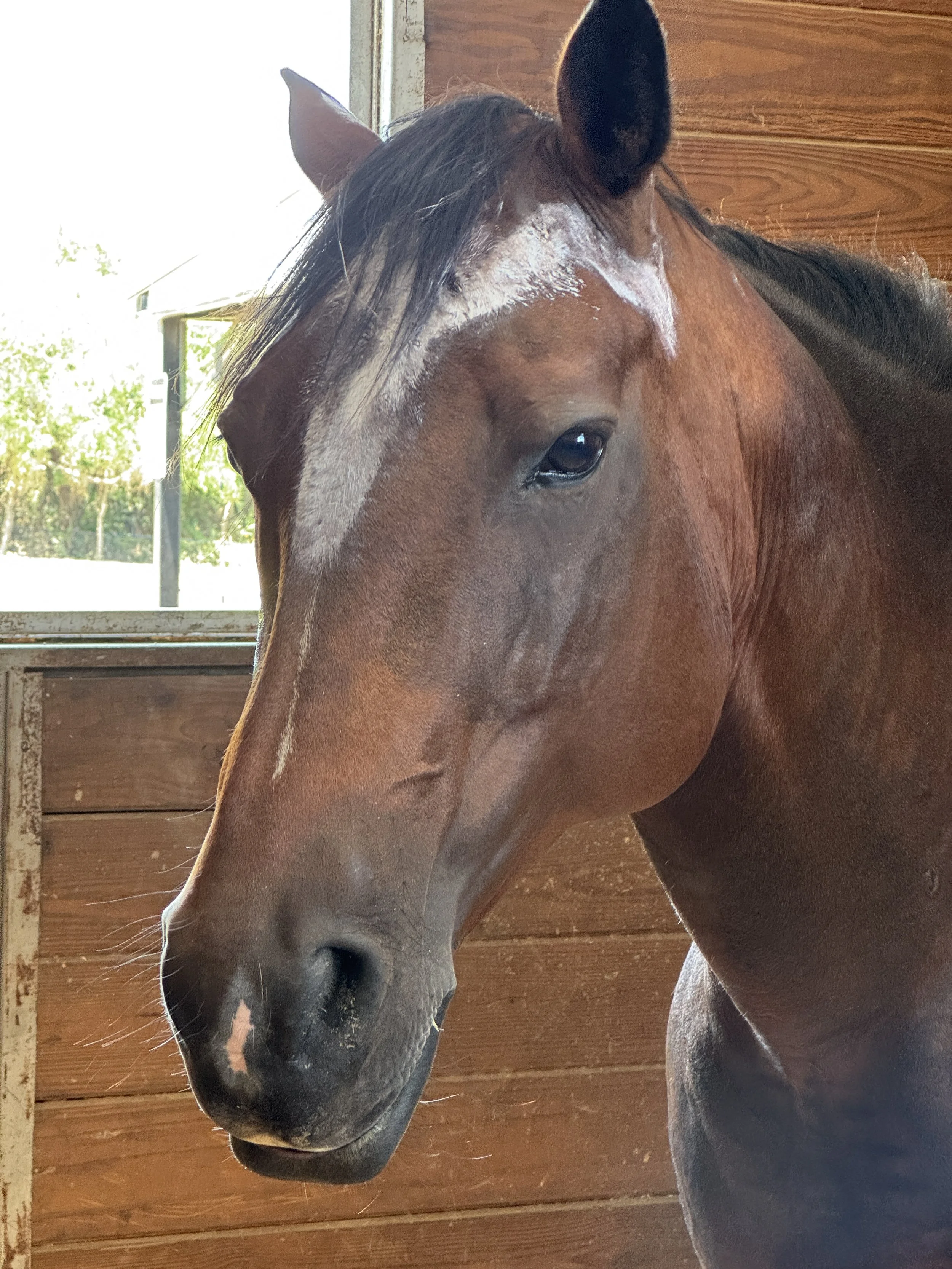
Tuesday’s Paint.
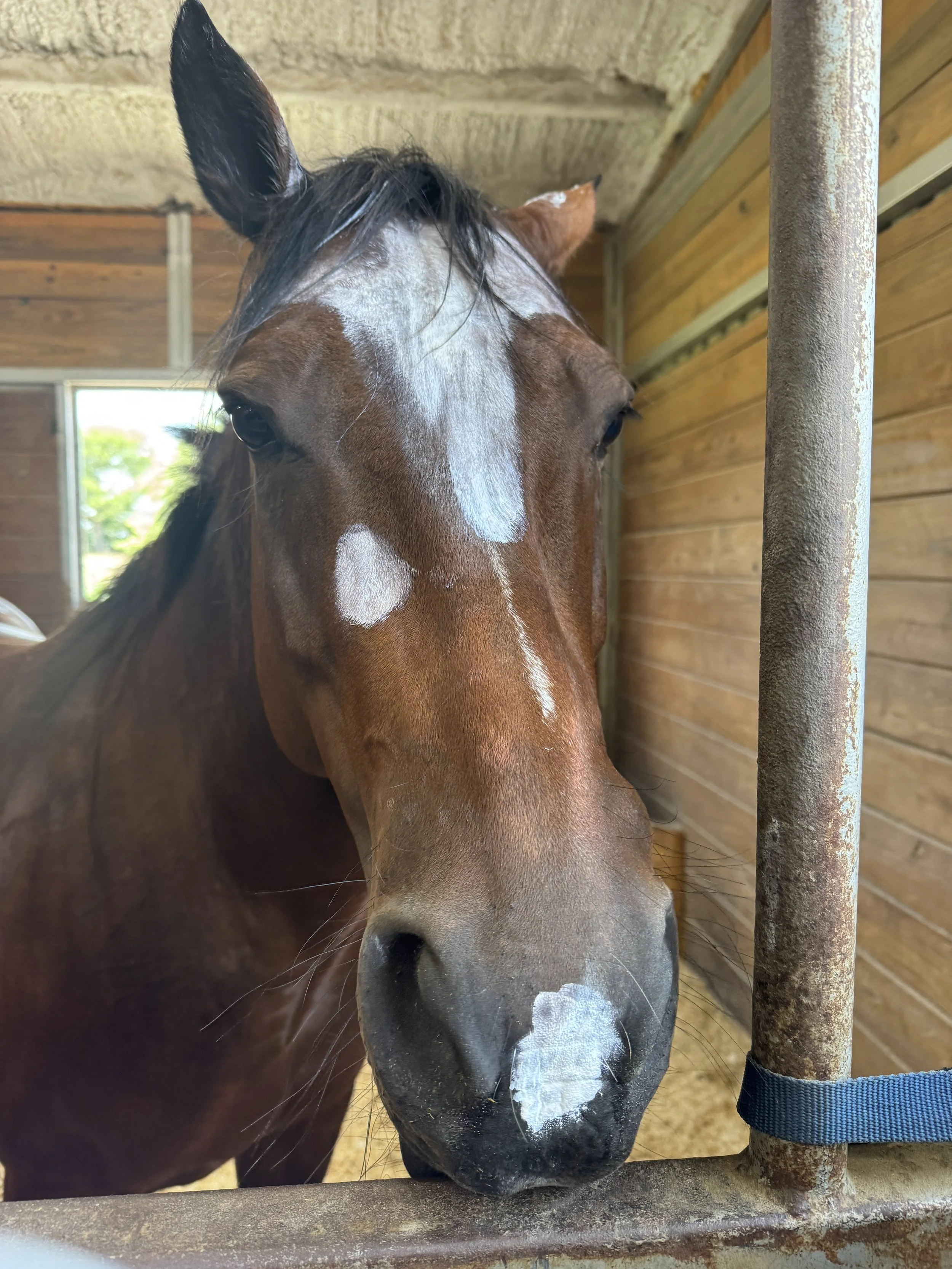
Wednesday’s Paint
By the way, did you know that horses can get sunburned? That pink spot on Bee’s nose is susceptible to being burnt.
The solution?
You guessed it, Desitin!
Why Were War Horses Painted?
Many Native American tribes decorated both themselves and their horses before ceremonies, hunts, and battles. These weren't random decorations. Every color and symbol often carried special meaning.
White commonly symbolized protection, peace, spirituality, or guidance.
Red often represented power, courage, or victory.
Black frequently symbolized strength or readiness for battle.
Handprints, circles, lightning bolts, and other markings could represent bravery, protection, speed, successful hunts, or important personal achievements.
The horse itself wasn't simply transportation. It was a trusted partner, and decorating the horse honored that partnership.
Fortunately for Bee, her white markings weren't preparing her for battle.
They were simply preparing her for another Texas summer.
Although she probably would have preferred cookies over diaper cream.
Paying Attention Matters
One thing I've learned over the past year is that horse ownership isn't about reacting to major problems. It's about noticing the tiny ones before they become major. The little bump that becomes a summer sore. The small patch of irritated skin before it spreads. The subtle change in a horse's coat. The fly that's spending a little too much time in one spot.
The earlier we notice these things, the easier they usually are to manage.
It's another reminder that caring for horses isn't just riding. It's observing. Every day. Every ride. Every grooming session.
And while Bee may not appreciate her temporary "war paint," I'm pretty sure she'll appreciate not spending the rest of the summer itching.
At least until I show up with another tube of Desitin.